Fibronexa
Fibronexa
Fibronexa
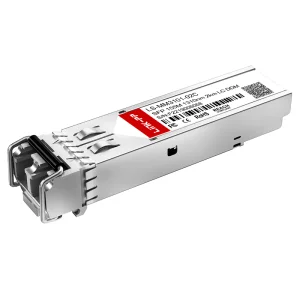
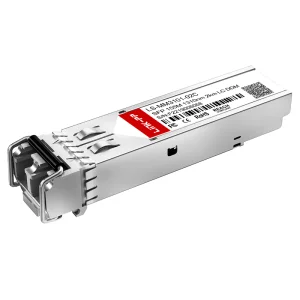
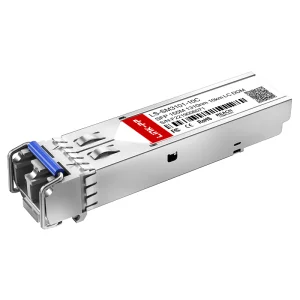
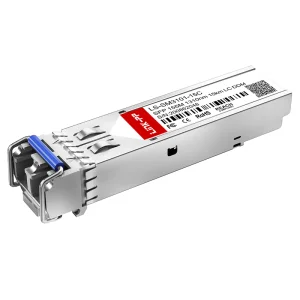
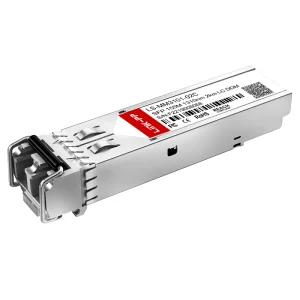
As an archipelago of over 700 islands and cays, The Bahamas faces unique telecommunications challenges. While the shift toward 10G and 100G is prevalent in data centers, 155M (STM-1/OC-3) and 622M (STM-4/OC-12) SFP modules remain critical components for the nation's infrastructure. These modules are the workhorses for industrial automation, legacy telecommunications backhaul, and specialized maritime communication systems.
In Nassau's financial district and Freeport's industrial zones, stability is prioritized over raw speed. 155M SFPs are widely deployed in SCADA systems for utility monitoring (water and electricity) across the Family Islands, where long-distance transmission over single-mode fiber is essential to overcome geographic isolation. Our Chinese-manufactured SFP modules are engineered to withstand the high humidity and salinity of the Bahamian climate, ensuring long-term reliability for critical infrastructure.
Luxury resorts in Paradise Island and Baha Mar utilize 155M modules for internal PBX systems and property management hardware, ensuring seamless guest services through reliable fiber links.
Freeport’s container port—one of the largest in the region—relies on 622M SFPs for terminal automation and security surveillance systems that require consistent, low-latency data throughput.
Inter-island connectivity for government agencies often utilizes legacy SDH/SONET protocols where 155M/622M SFPs provide the most cost-effective and stable interface for remote administrative offices.
Fibronexa Communications Co., Ltd. is a professional optical transceiver manufacturer established in 2016, bridging the gap between advanced Chinese manufacturing and Bahamian infrastructure needs.
Purchasing directly from a Chinese factory like Fibronexa offers Bahamian enterprises significant competitive advantages:
While the world moves toward Terabit speeds, the niche for 155M and 622M SFP modules is evolving toward Industrial IoT (IIoT) and Hardened Networking. In the Bahamas, this manifests as a need for "Ruggedized SFPs" capable of operating in non-climate-controlled environments, such as solar power stations or offshore monitoring rigs.
One major trend is the integration of Digital Diagnostics Monitoring (DDM) into lower-speed modules. DDM allows Bahamian network admins to remotely monitor temperature, optical power, and voltage, predicting failures before they happen—a vital feature for maintaining connectivity across the Exuma Cays or Eleuthera.


Operating optical networks in The Bahamas requires a deep understanding of environmental stressors and infrastructure limitations. Fibronexa’s 155M and 622M modules are designed with these specific factors in mind.
Optical transceivers in coastal regions like the Bahamas are susceptible to "creeping corrosion." Our modules feature gold-plated connectors and hermetically sealed TOSA/ROSA components to prevent salt-air ingress, ensuring that the 155M links between Grand Bahama and Abaco remain operational even in extreme weather conditions.
Inter-island connectivity often relies on older fiber cables with higher attenuation. Our 622M SFP modules provide an enhanced optical power budget, allowing for stable transmission even when fiber quality is less than ideal. This is particularly important for the Bahamas Domestic Submarine Network (BDSNi) interfaces where 155M/622M handoffs occur.
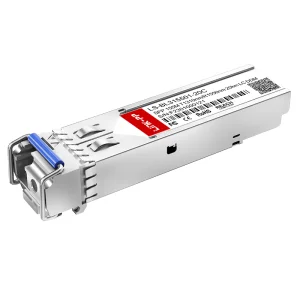
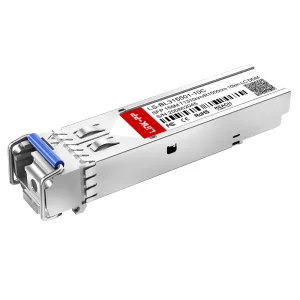
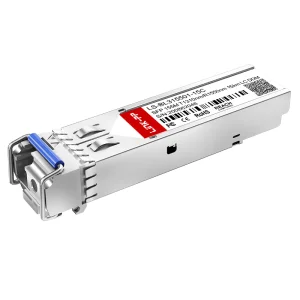
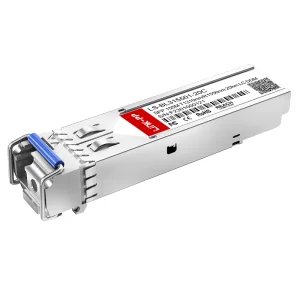
Single-fiber Bi-Directional (Bidi) technology is a game-changer for Bahamian telcos. By using 1310nm-TX/1550nm-RX on a single strand of fiber, operators can effectively double their fiber capacity without laying new cables—a massive cost saving for subsea and underground deployments in Nassau. Products like our 1550nm-TX/1310nm-RX Simplex LC 155M Bidi are top sellers for this very reason.
In the wake of Hurricane Dorian, the focus on resilient communications has intensified. Low-speed 155M/622M links are easier to maintain via satellite backhaul or microwave-to-fiber bridges during emergencies. Having a local stock of these compatible transceivers ensures that Bahamian businesses can recover their data networks rapidly.