 Fibronexa
A white-paper guide to Fibronexa’s 1.25G SFP manufacturing system, cold-climate deployment engineering, and localized optical supply for Novosibirsk data centers, telecom operators, industrial networks, transport systems, and research campuses.
Send Inquiry Now →These four original products are presented first because they cover the practical entry points of a Novosibirsk optical project: single-fiber access, multimode in-building connectivity, 10 km single-mode campus links, and 80 km regional backhaul. Each product image and original product URL is retained for direct technical review.
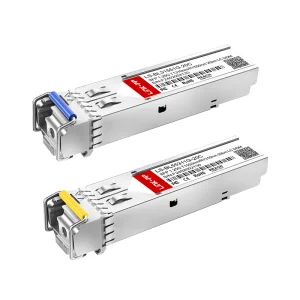
A practical choice when fiber pairs are scarce between a district exchange, enterprise campus, or remote cabinet. The simplex LC Bidi design reduces fiber consumption while supporting 1G service delivery over single-mode routes.
1310nm-TX/1550nm-RX Simplex LC Bidirectional Fiber Optic Transceivers Module Single Mode 1G Bidi SFP 20km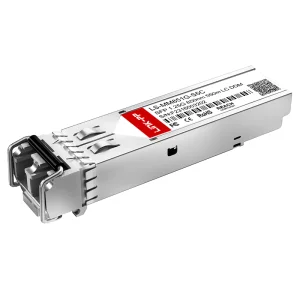
Well suited to enterprise floors, data-center management planes, laboratories, and CCTV aggregation where existing multimode fiber can be reused. The module supports short-reach 1.25G links with straightforward deployment economics.
Multimode Dual LC Optical Transceiver MMF 850nm 1.25G SFP Fiber Optic Module 550m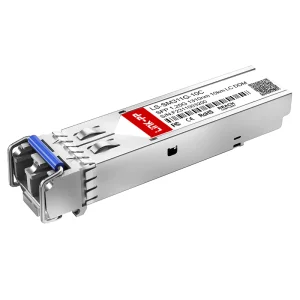
A core building block for 1000BASE-LX/LH-type links between buildings, substations, campus switches, and metro access nodes. The 10 km reach is often the best balance of link margin, cost, and availability.
Duplex LC SMF Fiber Optic Transceiver Single Mode 1310nm 1.25G SFP Optical Module 10km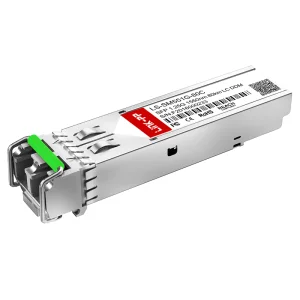
Designed for longer single-mode spans between district nodes, industrial sites, and remote facilities. For Novosibirsk Oblast projects, the 80 km class is frequently evaluated where aggregation points are widely separated.
1000BASE-ZX Mini Gbic Fiber Optical Transceiver Single Mode 1550nm 1G SFP Module 80kmFor Novosibirsk buyers, supplier credibility is not an abstract brand claim. It is the combination of production discipline, export experience, quality control, supply-chain depth, and the engineering ability to support 1G-to-10G/25G network transitions.
Novosibirsk is the largest city in Asian Russia and a major center for science, education, transport, manufacturing, energy, and digital services. That combination creates a distinctive optical networking profile: not every link needs 100G, but many links need dependable 1.25G connectivity across long distances, mixed fiber plants, and demanding climates.
In practical procurement terms, Novosibirsk is not a single market. It is a set of overlapping deployment environments. A metro ISP may need 20 km Bidi optics for enterprise tails. A data center operator may need 850 nm multimode modules for management switches and 1310 nm single-mode optics for cross-site resilience. An industrial enterprise may prioritize wide-temperature operation, EMI tolerance, and long-reach 1550 nm modules. A research campus may value DOM monitoring, stable interoperability, and long lifecycle availability. Fibronexa’s 1.25G SFP portfolio is structured to serve this mixed demand rather than forcing every project into one specification.
Novosibirsk’s fixed broadband, enterprise access, and metro Ethernet services continue to rely on large numbers of 1G ports. 1.25G SFP modules provide a cost-controlled way to connect customer premises aggregation, base stations, street cabinets, and enterprise tails to higher-capacity aggregation layers.
Single-fiber Bidi modules are especially useful where fiber ducts are congested or where only one strand is available. For 2–20 km routes, 1310 nm duplex or Bidi optics often deliver the best balance of link budget and price.
Regional data centers, disaster-recovery facilities, and edge compute rooms in Novosibirsk need reliable optics for management planes, storage networks, out-of-band control, and legacy service delivery. While 10G/25G dominates new fabric builds, 1G optics remain common for switch management, console aggregation, and low-bandwidth service nodes.
A practical BOM often combines 850 nm multimode optics for short indoor runs with 1310 nm single-mode optics for cross-building or metro links. This layered design avoids over-spending on every port while preserving a clean upgrade path.
Novosibirsk’s research and university ecosystem creates demand for stable laboratory links, campus backbones, instrument connectivity, and high-availability management networks. Many scientific and education systems are long-lived and standardized around Gigabit Ethernet, making 1.25G SFP interoperability a practical requirement rather than a temporary workaround.
For campus projects, DOM-capable modules simplify link monitoring, while consistent EEPROM coding helps reduce trouble tickets when equipment is moved between switches and routers.
Novosibirsk Oblast’s industrial base, power utilities, heating systems, rail infrastructure, and resource-related operations often place network equipment in cabinets that experience severe winter cold, temperature cycling, vibration, and electrical noise. Optical fiber is preferred for isolation and electromagnetic immunity, but the SFP transceiver itself must be selected with care.
Project teams should specify the actual operating temperature range, validate start-up behavior at low temperature, and confirm connector cleanliness and latching reliability. For critical substations and remote industrial sites, long-reach 1550 nm modules can reduce repeater requirements.
Video surveillance, warehouse automation, retail chains, logistics hubs, and public-safety systems generate steady demand for 1G optical links. The Trans-Siberian transport corridor and Novosibirsk’s role as a logistics center reinforce the need for reliable camera aggregation and remote-site connectivity.
In buildings, 1000BASE-SX or 1000BASE-T modules connect cameras and access switches. Across campuses or remote roads, 1000BASE-LX/LH, EX, or ZX modules extend the network without introducing copper-distance limitations.
Municipal networks, hospitals, clinics, transport operators, and public institutions often run mixed-vendor Ethernet estates. They need modules that are easy to qualify, easy to replace, and easy to document. Predictable optical performance and clear labeling matter as much as raw reach.
For distributed facilities, a standardized 1.25G SFP spare-parts program can reduce downtime. The same module family can serve access switches, CCTV aggregation, and emergency-network fallback links, simplifying inventory.
The optical transceiver industry is moving rapidly toward 400G and 800G in core and AI-driven data centers, but the network edge is not moving at the same speed everywhere. In access, industrial, surveillance, utility, and enterprise environments, 1.25G SFP modules remain a durable and economically rational interface standard.
The global commercial picture is best described as layered, not linear. Hyperscale data centers may refresh at high speeds, while telecom access networks, factories, hospitals, schools, and transport systems continue to install and maintain Gigabit Ethernet links. For many buyers, 1.25G SFP is the lowest-risk way to connect a large number of endpoints because it is well understood, widely supported, power-efficient, and available in multiple reach and fiber options.
Procurement behavior has also changed. After several years of supply-chain disruption, serious buyers increasingly dual-source or multi-source optical modules. They ask for consistent EEPROM coding, documented test data, stable packaging, and predictable lead times. Price remains important, but total cost of ownership includes interoperability testing, field replacement rates, spare-parts availability, and engineering support. This is especially relevant for Novosibirsk projects where long logistics distances make pre-shipment qualification more valuable than emergency replacement.
The world has an enormous installed base of Gigabit Ethernet switches, routers, media converters, and industrial devices. Replacing every 1G port is rarely justified when the service requirement is still 100–1000 Mbps. 1.25G SFP modules protect that installed base while higher-speed uplinks are upgraded selectively.
Buyers increasingly evaluate modules against SFP MSA, IEEE 802.3 Ethernet specifications, SFF-8472 DOM behavior, and platform-specific compatibility requirements. A module that powers up is not enough; it must negotiate correctly, report diagnostics accurately when required, and remain stable across temperature and traffic conditions.
Edge computing, smart manufacturing, video intelligence, and broadband expansion continue to create new fiber endpoints. In many projects, the most economical design uses 1G optics at the edge and reserves 10G/25G for aggregation. Bidi and extended-reach modules help reuse existing fiber routes with less civil work.
The numbers below are not decorative. They explain why a Novosibirsk buyer can evaluate Fibronexa as a production partner rather than a trading intermediary: facility discipline, export experience, QC depth, supply-chain scale, and engineering capacity all affect delivery confidence.
The same 1.25G SFP family can serve very different purposes. The right specification depends on fiber type, distance, temperature exposure, diagnostic requirements, and the commercial value of downtime. The scenarios below translate those variables into practical project patterns.
Connect enterprise buildings, small cells, Wi-Fi aggregation, and street cabinets to district switches. Use Bidi SFP where fiber is constrained, and 1310 nm duplex modules where pair availability is stable.
Support management switches, out-of-band access, legacy servers, and cross-room links while 10G/25G fabrics handle higher-speed workloads. Multimode 850 nm modules reduce cost for short indoor runs.
Connect laboratories, instrument clusters, library systems, and administrative buildings. DOM monitoring and consistent EEPROM behavior reduce troubleshooting across mixed switch vendors.
Use fiber for isolation and noise immunity in substations, heating plants, rail facilities, and factory automation. Validate low-temperature start-up and connector reliability for unheated cabinets.
Aggregate CCTV clusters, warehouses, logistics parks, retail sites, and public-safety cameras. Short multimode links work indoors; EX or ZX modules extend remote camera groups.
Connect rail signaling rooms, logistics terminals, municipal facilities, and remote community sites. Long-reach 1550 nm modules can reduce intermediate equipment, but link budget must be calculated with real fiber loss and connector count.
The future of 1.25G SFP is not about replacing 10G or 25G. It is about keeping the optical edge stable while higher layers evolve. That creates a clear roadmap for network operators in Novosibirsk: standardize the access layer, instrument the link, and migrate aggregation selectively.
Use qualified 1.25G SFP modules to protect existing Gigabit Ethernet investments. Prioritize consistent EEPROM coding, DOM where required, single-mode and multimode coverage, and a documented spare-parts strategy. For cold-climate sites, validate the exact operating temperature range rather than assuming commercial-temperature modules are sufficient.
Keep 1G at access and endpoint layers while introducing 10G/25G aggregation. Use Bidi and extended-reach optics to reuse fiber and reduce civil works. Build telemetry into acceptance criteria for critical links, and record module serial numbers so field failures can be correlated with batch, site, and environmental conditions.
Expect more attention to power per port, automated inventory, digital twins, open networking, and long lifecycle support. High-speed optics will continue to advance in core and AI infrastructure, but 1.25G SFP will remain the practical interface for many sensors, access nodes, industrial devices, and legacy systems that do not require higher bandwidth.
Fibronexa’s engineering scope extends beyond 1.25G into 10G, 25G, 100G, 400G, and emerging 800G solutions. That matters for a Novosibirsk project because the supplier can support both the current optical BOM and the next migration phase. The company’s customization options include wavelength, distance, packaging, and protocol compatibility. For buyers, the practical benefit is fewer qualification cycles when a network moves from Gigabit access to higher-speed aggregation.
A successful regional deployment is not a pile of individual transceiver orders. It is a repeatable optical standard: defined fiber types, approved reach classes, a controlled compatibility matrix, and a spare-parts plan that reflects the actual failure risk of each site.
Standardize 1000BASE-LX/LH and Bidi modules for 2–20 km access routes. Reserve 1000BASE-EX and ZX for longer tails. Maintain a small approved list rather than dozens of near-duplicate part numbers.
Define temperature, enclosure, connector, and ESD requirements per site class. Use optical isolation for electrical noise environments. For critical sites, test low-temperature start-up and record the acceptance result.
Use 850 nm multimode optics for short indoor links and 1310 nm single-mode optics for cross-building resilience. Keep management-plane optics independent from production fabric optics where practical.
Aggregate cameras and transport control systems with 1G optics, then reserve higher speeds for core aggregation. Use DOM-enabled modules for remote diagnostics where switch platforms support it.
The following four original products complement the priority set above. They are especially relevant for campus networks, enterprise switching, data-center management, and service-provider projects that need a balanced mix of multimode, copper, and single-mode options.
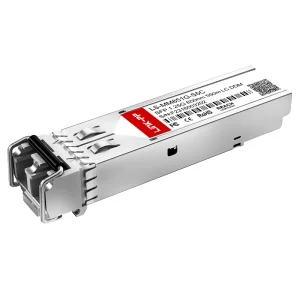
A common choice for short-reach multimode links in enterprise, research, and data-center environments where 550 m class connectivity is sufficient.
1000BASE-SX SFP Ethernet Module 850nm 550m Duplex LC MMF Fiber Optical Transceiver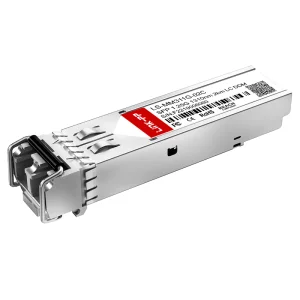
Useful where copper handoff or legacy equipment compatibility is required. It helps bridge existing RJ45 infrastructure into an SFP-based switch environment.
1000BASE-T SFP 1310nm 2km Duplex LC MMF Optical Fiber Transceiver Module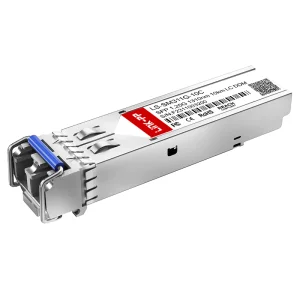
A natural baseline for single-mode campus and metro links. DOM support can simplify optical monitoring on compatible switches and routers.
1000BASE-LX/LH SFP Module 1310nm 10km DOM Duplex LC SMF Optical Transceiver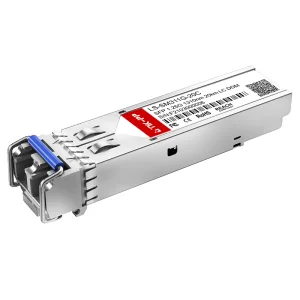
Provides additional link margin for metro access and enterprise tails where the actual fiber route is longer than a standard 10 km campus span.
1000BASE-LX/LH SFP Transceiver 1310nm 20km Duplex LC SMF Optical ModuleOptical modules are small, but they sit on critical links. A serious supplier must make quality visible through process, documentation, and project support—not only through a product photo.
Fibronexa’s quality regime includes automated optical testing, manual inspection, 100% performance testing, and environmental stress screening. The QC team includes approximately 45 trained professionals. For Novosibirsk projects, buyers should request the relevant test records for the selected model and coding configuration.
Where project conditions include unheated cabinets or severe temperature cycling, the acceptance plan should explicitly define the operating temperature range, warm-up behavior, and post-cycling optical performance. If an industrial-temperature variant is required, it should be specified in the RFQ rather than assumed from a product family name.
Compatibility depends on more than optical wavelength. EEPROM coding, DOM behavior, laser bias reporting, and platform-specific identification can affect whether a module is accepted by a switch. Fibronexa supports OEM/ODM customization and can align coding with project requirements subject to validation.
For multi-site rollouts, keep module serial numbers, test dates, and site assignments in the project register. This makes it easier to correlate field issues with batches, temperatures, switch platforms, or installation practices, and it supports a mature spare-parts program.
Optical ports are sensitive to dust, shock, and moisture. Export packaging should use appropriate ESD protection, port caps, shock-resistant cartons, and clear labeling. For long-distance logistics into Siberia, carton configuration and humidity protection should be agreed during order confirmation.
Fibronexa has more than 6 years of export experience and serves customers across North America, Europe, Southeast Asia, and the Middle East. Destination-specific documentation and compliance requirements should always be reviewed before shipment for the final product and route.
Novosibirsk buyers should separate strategic and tactical risk. Strategic risk is dependence on a single module source. Tactical risk is a failed module in a remote cabinet during winter. The response is a qualified primary and alternate BOM, a site-level spare-parts policy, and pre-shipment samples for critical platforms.
For repeat projects, consider a rolling stock agreement for the most common reach classes: 850 nm multimode, 1310 nm 10 km, 1310 nm 20 km, 1550 nm 40 km, and 1550 nm 80 km. Single-fiber Bidi modules should also be stocked where fiber scarcity is common.
These answers address the questions that commonly appear in procurement research, technical due diligence, and export inquiries for 1.25G SFP modules in Novosibirsk and the wider Siberian market.
Yes. While 10G, 25G, 100G, 400G, and 800G attract attention in core networks and AI data centers, a large installed base of Gigabit Ethernet equipment still requires 1.25G SFP modules. They are widely used in telecom access, enterprise campus, industrial automation, CCTV, utilities, and management networks. For many Novosibirsk projects, 1.25G is the most cost-effective and lowest-risk interface for the edge.
Start with the fiber plant and distance. For 100–550 m multimode, evaluate 1000BASE-SX. For 2–20 km single-mode access, evaluate 1000BASE-LX/LH or Bidi if fiber is scarce. For 40 km use 1000BASE-EX; for 80 km use 1000BASE-ZX; for 100–160 km evaluate EZX or ZXC with a proper link budget. The four products shown above are a practical starting point for evaluation.
Yes. Fibronexa offers OEM/ODM support and customization for wavelength, distance, packaging, and protocol compatibility. EEPROM coding requirements should be stated clearly in the inquiry, including the target switch or router platform, firmware version, and any diagnostic requirements. Final compatibility should be confirmed through sample validation where required.
Temperature capability depends on the exact module variant. Commercial-temperature modules should not be assumed to cover unheated outdoor cabinets in severe winter conditions. For sites with low-temperature exposure, specify the required operating range in the RFQ and ask for validation data. Fibronexa can review industrial-temperature options and test requirements based on the project profile.
These families mainly describe reach classes over single-mode fiber. LX/LH commonly covers 10–20 km, EX covers around 40 km, ZX covers around 80 km, EZX extends to 100–120 km, and ZXC reaches around 160 km. Actual achievable distance depends on fiber loss, splice quality, connector count, and link budget. Always calculate margin rather than relying only on the label.
Use Bidi when only one fiber strand is available or when fiber capacity is expensive to expand. Bidi modules transmit and receive on different wavelengths over a single strand, so they must be deployed in matched pairs. Duplex modules remain simpler for conventional two-strand single-mode links.
Compatibility is verified through a combination of MSA-compliant design, EEPROM coding, and platform-specific testing where required. Provide the exact equipment model, port type, and firmware version during inquiry. For critical deployments, order samples first and validate link-up, traffic stability, DOM reporting, and temperature behavior before full rollout.
Fibronexa’s standard quality process includes 100% performance testing and environmental stress screening. Project-specific documents can be discussed during quotation, such as test reports, packing lists, and product labels. Regulatory and compliance documentation depends on the final product configuration and destination requirements, so it should be confirmed before order placement.
MOQ and lead time depend on the module type, coding requirement, test scope, and current production schedule. Standard products may have shorter lead times than custom-coded or industrial-temperature variants. For project planning, share your forecast by reach class and required delivery date so that production and logistics can be aligned.
With more than 6 years of export experience and approximately USD 12 million in annual export revenue, Fibronexa supports international trade documentation and shipment coordination. Final compliance depends on the product, destination, carrier, and applicable regulations. Buyers should confirm labeling, documents, and import requirements with their local agent before shipment.
Yes. The same 1.25G SFP families are commonly used for CCTV aggregation, industrial Ethernet, substations, transport systems, and remote facilities. The key is to select the right fiber type and reach class, and to validate temperature and diagnostic requirements for the specific installation environment.
Sample orders are recommended for new switch platforms, long-reach links, Bidi designs, or cold-temperature installations. Provide the target model, quantity, coding requirement, and test expectations. A pre-shipment sample validation step reduces integration risk and helps confirm the final BOM before volume production.
Share your fiber type, link distance, switch platform, temperature requirement, EEPROM coding needs, and estimated quantity. Fibronexa will help match the right 1.25G SFP module and provide a practical quotation path for Novosibirsk projects.
Send Inquiry Now →The final product set covers 40 km to 160 km single-mode links plus additional LX, SX, and ZX variants. These modules are relevant for regional backhaul, remote facilities, extended-reach projects, and buyers who need multiple original product options in one inquiry.
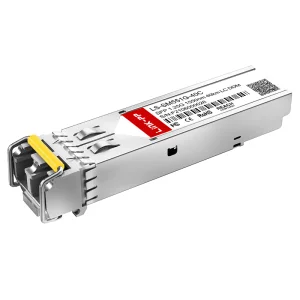
For district nodes, industrial sites, and enterprise tails where 20 km class optics do not provide enough margin.
1000BASE-EX SFP 1550nm 40km Duplex LC SMF Fiber Optical Transceiver Module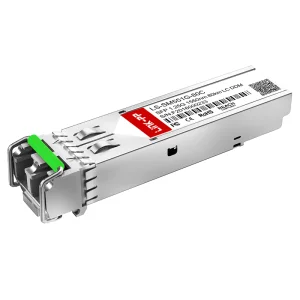
A common long-reach option for remote facilities, aggregation links, and regional transport-adjacent networks.
1000BASE-ZX SFP 1550nm 80km DOM Duplex LC SMF Optical Transceiver Module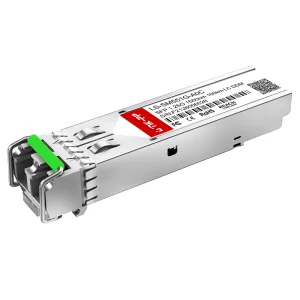
An extended-reach option for longer single-mode routes where link budget and fiber quality are carefully engineered.
1000BASE-EZX SFP 1550nm 100km Duplex LC SMF Optical Transceiver Module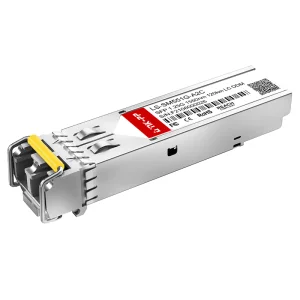
Designed for projects that need additional reach beyond 100 km, subject to a full optical link-budget review.
1000BASE-EZX SFP Transceiver 1550nm 120km DOM Duplex LC SMF Fiber Optical Module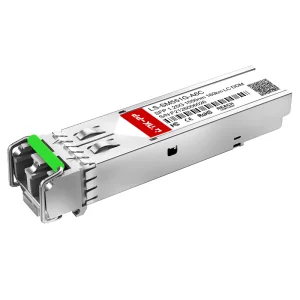
A specialised long-reach module for sparse networks and remote sites where intermediate active equipment should be avoided.
1000BASE-ZXC SFP Module 1550nm 160km Duplex LC SMF Fiber Optical Transceiver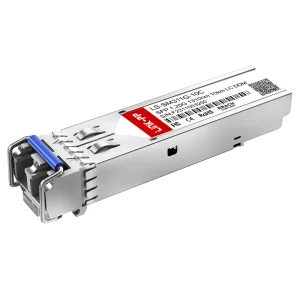
A versatile single-mode module for campus, enterprise, and access links with DOM support on compatible platforms.
1000BASE-LX/LH SFP Transceiver 1310nm 10km DOM Duplex LC SMF 1.25G Optical Module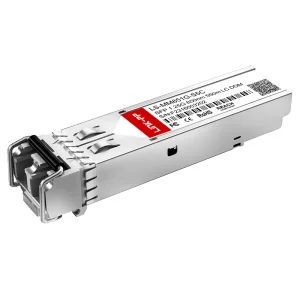
A short-reach multimode option for indoor switching, CCTV clusters, labs, and data-center management links.
1000BASE-SX SFP 850nm 550m DOM Duplex LC MMF 1.25G Transceiver Module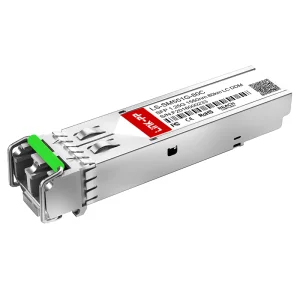
An additional 80 km single-mode option for procurement teams that require multiple source choices or project-specific coding.
1000BASE-ZX SFP 1550nm 80km Duplex LC SMF 1.25G Optical Transceiver Module