Fibronexa Fibronexa

What Is the Best China Single Mode Transceiver?

Time:2026-09-30 Author:Mason
0%

Choosing the best China single mode transceiver requires more than comparing prices on a supplier page. The right module must match the network’s wavelength, transmission distance, data rate, connector, and equipment brand. A 10G SFP+ module for 80 kilometers may look impressive, but it can be unsuitable for a short data-center link. Compatibility comes first.

Reliable evaluation also depends on evidence. Buyers should review datasheets, optical power ranges, receiver sensitivity, operating temperature, and digital diagnostic monitoring. Certification records and testing procedures matter as well. Ask whether the manufacturer tests every unit before shipment. Check how clearly the supplier handles firmware compatibility and warranty claims. Small details often reveal engineering discipline.

Real network conditions can be less predictable. Fiber routes may include extra splices, dusty cabinets, or temperature changes. A stable single mode transceiver should maintain performance under these practical pressures. Yet no shortlist is flawless. A vendor may provide excellent optics but slower technical support. Another may offer responsive service with limited customization. That trade-off deserves honest attention. Independent test results are useful, although they may not represent every installation. This guide compares China-based options through performance, interoperability, quality control, support, and long-term value. It also considers where cautious buyers should verify claims before placing a large order. The “best” choice is not always the cheapest module. Sometimes, dependable documentation is worth more than a small discount.
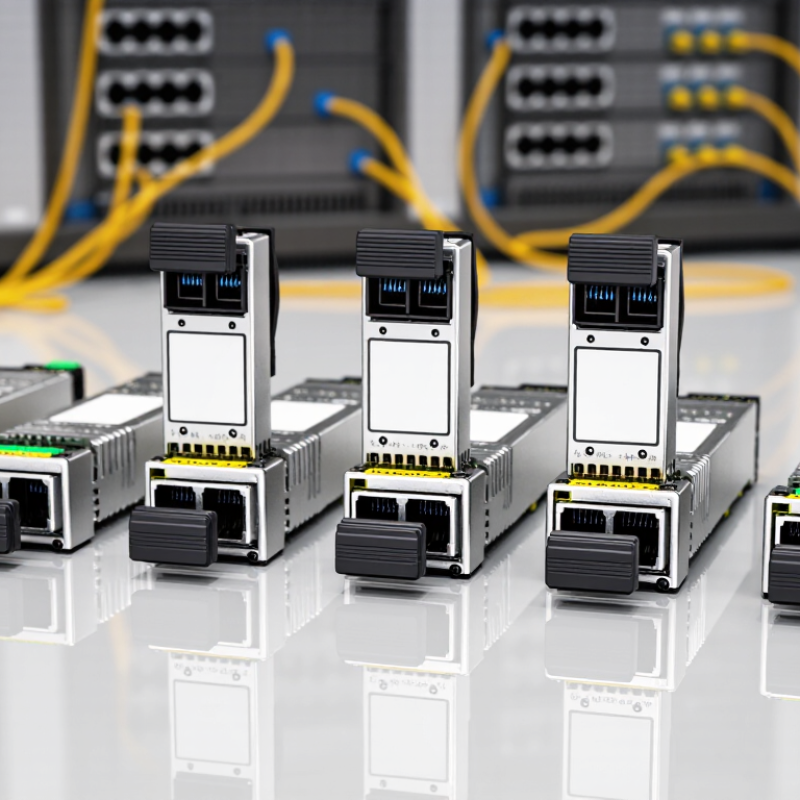
What Is the Best China Single Mode Transceiver?

What Is a China Single-Mode Transceiver?

A China single-mode transceiver is an optical networking module manufactured in China for long-distance data communication. It converts electrical signals into light and sends them through single-mode fiber. The fiber has a narrow core, usually around 9 micrometers, which helps light travel farther with less dispersion.

These transceivers commonly support links from several kilometers to more than 80 kilometers, depending on wavelength, optical power, and receiver sensitivity. Common wavelengths include 1310 nm and 1550 nm.

A suitable module must match the fiber type, connector, transmission distance, data rate, and host equipment. Small details matter. A wrong wavelength can make a stable-looking link unreliable.

In practical purchasing, technical documents deserve careful attention. Check operating temperature, digital monitoring functions, alarm thresholds, and measured optical performance. Compliance records and test reports should be available from a dependable supplier.

Field teams should also inspect connector cleanliness and confirm the module’s coding before installation. Dust causes surprising failures. I have found that published distance ratings can feel optimistic when cables, splices, and patch panels add loss.

This is where careful testing becomes more valuable than a low price. A good evaluation includes power readings, temperature checks, and several hours of continuous traffic. The process may seem slow, but it exposes weaknesses before they affect a live network.

How Does a Single-Mode Transceiver Work?

A single-mode transceiver converts electrical data into light for transmission through a narrow-core optical fiber. Its transmitter uses a precisely controlled laser. The laser sends pulses at a selected wavelength, commonly around 1310 or 1550 nanometers. These pulses travel long distances with limited dispersion.

At the receiving end, a photodiode detects the incoming light. It changes optical pulses back into electrical signals for switches, routers, or other network equipment. The transceiver also monitors temperature, voltage, and optical power in many installations. These readings help technicians identify weak connections, dirty end faces, or excessive fiber loss.

The fiber core is extremely small. Alignment matters. During field testing, I check connector cleanliness before replacing hardware. A tiny particle can create unstable readings or intermittent links. This practical step is easy to overlook, even by experienced installers. The link budget must also include cable length, connector loss, splice loss, and operating temperature. A transceiver may work perfectly on a short test fiber but fail across a long outdoor route.

Duplex models use separate fibers for transmitting and receiving. Bidirectional models can use different wavelengths on one fiber. The correct choice depends on distance, fiber type, port speed, and network design. Datasheets provide reliable limits, but real installations can differ. I therefore verify performance with an optical power meter and a fiber inspection scope.

Which Specifications Determine Transceiver Performance?

Choosing the best China single mode transceiver starts with specifications, not appearance or price. I would not pretend one module fits every network.

Wavelength is the first checkpoint. For 10G links, IEEE 802.3ae defines 10GBASE-LR operation at 1310 nm and a reach of 10 kilometers. This suits many metropolitan and data-center connections. Fiber compatibility also matters. ITU-T G.652.D fiber supports low water-peak transmission across common optical bands. A mismatch can create unexpected attenuation.

Optical budget often decides real performance. Check transmitter power, receiver sensitivity, and dispersion limits together. A 6 dB budget may work on a clean five-kilometer route, but connectors, bends, and aging reduce the margin. Small losses accumulate. Very quickly. The transceiver should also match the required data rate, duplex method, temperature range, and digital monitoring functions. The Optical Internetworking Forum’s 2024 industry outlook highlights rising demand for higher-speed optical links, while LightCounting’s 2024 market forecast estimated AI-related optical transceiver demand could exceed 10 billion US dollars by 2027. That growth increases pressure on thermal control and power efficiency. Still, the forecast is not a guarantee for every Chinese deployment.

For field selection, I would record actual fiber length, connector count, ambient temperature, and measured receive power. Vendor test data helps, but installation records are stronger evidence. A lower-cost module can be reliable. Only when its measured margin remains stable under heat, distance, and traffic variation.

What Is the Best China Single Mode Transceiver? - Which Specifications Determine Transceiver Performance?

There is no single best single-mode transceiver for every network. The appropriate choice depends on transmission distance, data rate, fiber type, optical budget, connector configuration, operating temperature, power consumption, and equipment compatibility. The following table summarizes common industry-standard single-mode transceiver options without referring to any company or brand.

Single-Mode Transceiver Performance Reference Table
Typical Standard Data Rate Form Factor Wavelength Single-Mode Fiber Reach Optical Interface Typical Transmit Power Typical Receiver Sensitivity Typical Power Consumption Main Application Key Performance Considerations
1000BASE-LX 1.25 Gb/s SFP 1310 nm Up to 10 km Duplex LC Typically -3 to -1 dBm Typically better than -19 dBm Usually below 1.5 W Enterprise access networks, campus links, and legacy aggregation Verify link budget, duplex fiber polarity, and equipment support for 1 Gb/s operation.
10GBASE-LR 10.3125 Gb/s SFP+ 1310 nm Up to 10 km Duplex LC Typically -1 to +4 dBm Typically better than -14.4 dBm Usually below 1.5 W Data-center interconnection, enterprise aggregation, and metro access Low power and low latency are important; ensure the host port supports the required coding and rate.
10GBASE-ER 10.3125 Gb/s SFP+ 1550 nm Up to 40 km Duplex LC Typically 0 to +4 dBm Typically better than -16 dBm Usually below 1.8 W Long-distance campus, metro, and telecom links Longer reach requires careful control of dispersion, connector loss, and receiver overload.
25GBASE-LR 25.78125 Gb/s SFP28 1310 nm Up to 10 km Duplex LC Typically -1 to +4 dBm Typically better than -10.5 dBm Usually below 2.0 W High-density server connections and data-center leaf-spine networks Host interoperability, forward-error-correction settings, and thermal performance are critical.
40GBASE-LR4 41.25 Gb/s aggregate QSFP+ Four lanes around 1310 nm Up to 10 km Duplex LC Typically -2.7 to +4 dBm Typically better than -11.5 dBm Usually below 3.5 W Data-center aggregation and enterprise core links Uses wavelength multiplexing; check lane monitoring, optical budget, and breakout compatibility.
100GBASE-LR4 103.125 Gb/s aggregate QSFP28 Four lanes around 1310 nm Up to 10 km Duplex LC Typically -2.9 to +4 dBm Typically better than -8.4 dBm Usually below 4.5 W Data-center spine connections, metro access, and high-capacity enterprise networks FEC configuration, insertion loss, chromatic dispersion, and host interoperability strongly affect performance.
100GBASE-ER4 103.125 Gb/s aggregate QSFP28 Four lanes around 1310 nm Up to 30–40 km, depending on implementation Duplex LC Typically 2 to +6 dBm Typically better than -8 dBm Usually below 6.0 W Metro networks and extended campus connections Higher optical power and dispersion tolerance are required; link engineering is essential.
100GBASE-DR 103.125 Gb/s aggregate QSFP28 or QSFP112, depending on host generation 1310 nm, four parallel lanes Up to 500 m Single MPO-12 Typically -2.9 to +4 dBm Typically better than -5.9 dBm Usually below 4.5 W Short-reach data-center spine-leaf connections Parallel single-mode fiber polarity, MPO cleanliness, lane mapping, and FEC must be correct.
400GBASE-DR4 425 Gb/s aggregate QSFP-DD or OSFP 1310 nm, four parallel lanes Up to 500 m Single MPO-12 Typically -2.9 to +4 dBm Typically better than -5.9 dBm Typically 10–15 W High-density artificial-intelligence, cloud, and data-center networks Host thermal design, electrical lane management, FEC, MPO polarity, and module interoperability are decisive.
400GBASE-FR4 425 Gb/s aggregate QSFP-DD or OSFP Four wavelengths around 1310 nm Up to 2 km Duplex LC Typically -2 to +4 dBm Typically better than -6.8 dBm Typically 10–15 W Data-center interconnection and medium-distance spine links Wavelength multiplexing, dispersion, thermal stability, and receiver margin should be evaluated together.
Selection guidance:
  • Optical link budget: Calculate transmitter power minus receiver sensitivity, then reserve margin for fiber attenuation, connectors, splices, aging, and repair activities.
  • Reach: Select the shortest compliant reach that covers the actual distance; excessive reach can increase cost and power consumption without improving the link.
  • Fiber and connector type: Confirm whether the installation uses duplex LC, simplex LC, or parallel MPO single-mode fiber, including polarity and lane mapping.
  • Wavelength and dispersion: 1310 nm is common for short and medium single-mode links, while 1550 nm can support longer reach but may require closer dispersion and power control.
  • Compatibility: Check the host data rate, electrical interface, modulation or FEC requirements, coding, management interface, and operating temperature range.
  • Reliability: Important indicators include digital diagnostic monitoring, stable optical output, low bit-error rate, thermal protection, compliant firmware, and documented quality-control testing.

How Do China-Made Transceivers Compare in Quality and Value?

What Is the Best China Single Mode Transceiver?

China-made single mode transceivers now compete through engineering, testing, and pricing. LightCounting’s 2024 market outlook estimates that optical transceiver demand exceeded 10 billion dollars in 2023. It also expects strong growth through 2028, driven by data centers and AI networks. This scale encourages better manufacturing discipline, but quality still varies between suppliers.

In practical installations, a reliable module should match the required wavelength, reach, connector, and operating temperature. Check insertion loss, receiver sensitivity, digital diagnostics, and bit-error-rate results. Independent testing matters. Omdia’s 2024 optical networking analysis highlights interoperability as a major purchasing concern, especially in multi-vendor networks. Lower prices can be attractive, yet replacement labor may erase the savings. I have seen inexpensive modules perform well in short links, while longer links exposed weak temperature control. That is an uncomfortable lesson.

Tips

Request a current test report, lot traceability, and clear warranty terms. Test several samples before deployment. Ask whether coding can support your switch or router. A 10G module that passes on a workbench may still fail under heat, dust, or continuous traffic. Compare total cost, not only the unit price.

How to Choose the Best China Single-Mode Transceiver

Choosing the best China single-mode transceiver starts with network requirements, not price. Define the wavelength, data rate, reach, connector, and operating temperature. A 10-kilometre link needs a different optical budget from a 40-kilometre connection.

IEEE 802.3 identifies 100GBASE-LR4 for reaches up to 10 kilometres. Newer 400G standards also commonly target 10 kilometres over single-mode fiber. Match the module to the actual protocol. A physically compatible transceiver may still fail during link training or interoperability tests. Check DOM support, receiver sensitivity, transmitter power, and dispersion limits. These figures matter more than a polished product page.

Fiber quality deserves equal attention. ITU-T G.652.D specifies maximum attenuation around 0.4 dB/km at common 1310 nm and 1550 nm operating windows. Ask for measured test results, not only compliance claims. Reliable suppliers should provide serial traceability, temperature testing, wavelength verification, and sample-based aging data. Independent laboratory reports add credibility.

LightCounting’s 2024 optical communications forecast highlights continuing demand for 400G and 800G modules. That trend does not make every high-speed module suitable for your network. I have seen purchasing teams overvalue headline speed and undervalue thermal stability. It is an easy mistake. Request evaluation samples, test them with your own switches, and compare error counters after several days. A lower quotation can become expensive when replacement labor, downtime, and compatibility problems appear. Raw cost is only one measurement.

FAQS

How does a single-mode transceiver send data?

It converts electrical data into laser light. The light travels through a narrow-core fiber at a selected wavelength, often around 1310 or 1550 nanometers.

How does the receiver turn light back into data?

A photodiode detects incoming light pulses and converts them into electrical signals. Network equipment can then process the data.

Why does connector cleanliness matter?

A tiny particle on the connector face can cause unstable readings or an intermittent link. Inspect and clean connectors before replacing hardware. Easy to miss.

What specifications should I check before choosing a transceiver?

Match wavelength, data rate, fiber type, reach, duplex method, and temperature range. Appearance alone tells you very little.

How far can a 10G single-mode link reach?

A common 10G long-reach specification supports distances up to 10 kilometers at 1310 nanometers. Actual reach depends on the complete link.

What is an optical budget, and why does it matter?

It compares transmitted power with receiver sensitivity. Connectors, splices, bends, and aging all reduce available margin. Small losses add up.

Can one fiber carry both transmitting and receiving signals?

Yes. Bidirectional models use different wavelengths on one fiber. Duplex models use separate fibers for each direction.

How can I check whether a link will work in the field?

Record the route length, connector count, temperature, and received power. Use a power meter and inspection scope. I would not rely on a short test fiber alone.

Is a lower-cost module always a poor choice?

Not necessarily. It can work reliably if measured power margin stays stable across distance, heat, and traffic changes. I have sometimes trusted the price too much.

Conclusion

A single mode transceiver is an optical communication device designed to transmit and receive data over single-mode fiber, making it suitable for long-distance, high-speed network connections. It works by converting electrical data into optical signals for transmission and then converting incoming light signals back into electrical data. Its performance depends on key specifications such as transmission distance, data rate, wavelength, connector type, operating temperature, optical power, receiver sensitivity, and compatibility with network equipment.

China-made transceivers can offer a strong balance of quality, reliability, and value when produced under consistent manufacturing and testing standards. To choose the best China single-mode transceiver, buyers should first match the module with their network speed, fiber type, transmission distance, and equipment requirements. They should also evaluate compatibility, compliance, warranty coverage, testing procedures, and supplier support. A careful comparison of technical specifications and overall lifecycle cost can help ensure stable performance and long-term network efficiency.

Mason

Mason

Mason is a seasoned marketing professional with a deep expertise in the company's offerings and a passion for driving brand awareness. With a strong background in digital marketing strategies, he has an innate ability to connect with diverse audiences and effectively communicate product benefits.......