Fibronexa
China’s 10G SFP+ transceiver market includes established manufacturers, specialized optical companies, and fast-growing networking brands. This article examines ten notable Chinese suppliers through practical purchasing criteria. These criteria include product range, optical performance, manufacturing capability, compatibility testing, certifications, warranty support, and delivery consistency.
A 10G SFP+ transceiver may look like a small metal module. Its performance can determine whether a data center link remains stable under continuous traffic. We will compare common options, including 10GBASE-SR, 10GBASE-LR, copper SFP+, CWDM, and BiDi models. Fiber reach matters. So do connector quality, DOM monitoring, temperature tolerance, and switch compatibility. John D’Ambrosia, a veteran Ethernet industry leader and Ethernet Alliance chairman, has said, “Ethernet is everywhere.” His observation explains why reliable optical modules remain important across data centers, enterprise networks, and telecommunications systems.
The ranking will not rely only on brand visibility. Factory experience, optical test procedures, engineering support, and customer feedback also deserve attention. However, supplier information can change quickly. Public specifications may not reveal actual batch consistency. That is a limitation worth recognizing. Buyers should request test reports, coding details, sample units, and written compatibility confirmation before placing large orders. A low unit price can become expensive after repeated link failures. This guide aims to provide a practical starting point, not an unquestionable verdict. It also encourages readers to verify current certifications, lead times, and after-sales policies directly with each supplier.
What Are 10G SFP+ Transceivers?
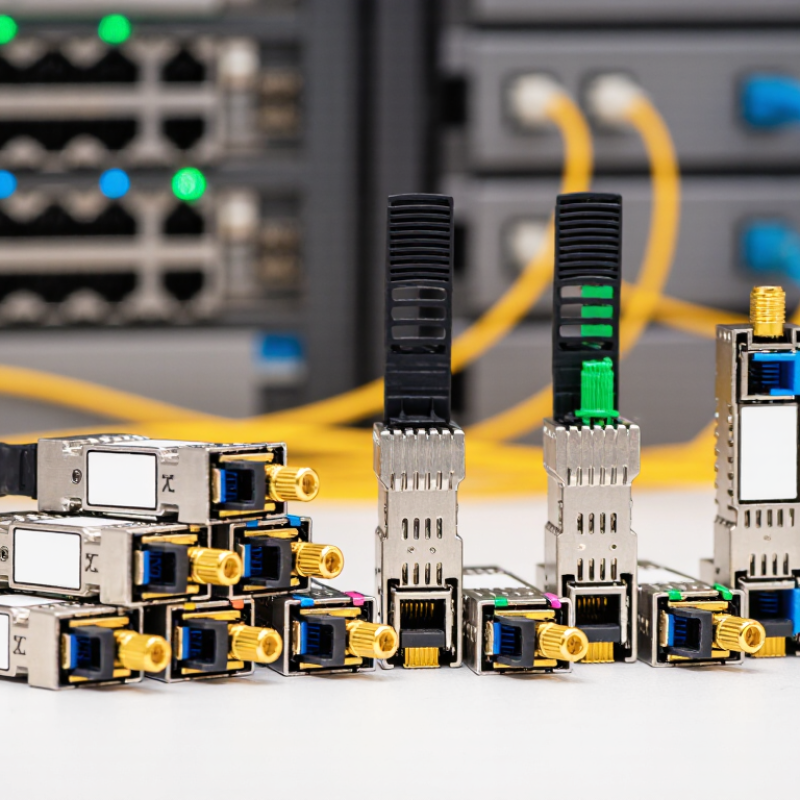
A 10G SFP+ transceiver is a compact, hot-swappable module for 10 Gigabit Ethernet links. It converts electrical signals into optical signals, then reverses the process at the receiving end. The SFP+ form factor follows industry specifications such as SFF-8431 and SFF-8472. These standards define electrical interfaces, monitoring functions, and diagnostic reporting.
Most optical versions use 850 nm, 1310 nm, or 1550 nm wavelengths. Multimode modules commonly support short data-center connections, often up to 300 meters with suitable fiber. Single-mode versions can reach 10 kilometers or more, depending on optical power and fiber quality. IEEE 802.3ae defines 10GbE operation at a nominal 10 Gbit/s, while the actual serial signaling rate is about 10.3125 Gbaud. Ethernet Alliance roadmaps continue to show 10GbE as a practical access and aggregation speed, although newer links are expanding quickly.
Tips: Match wavelength, fiber type, distance, connector, and temperature rating. Check digital diagnostics before deployment. Compatibility is not always perfect, even when specifications appear similar. A field test is wiser than relying only on a datasheet. LightCounting’s 2024 optical networking analysis also highlights sustained demand for data-center connectivity, but demand does not guarantee every module will perform equally. Clean connectors matter. Very much.
A reliable 10G SFP+ supplier needs more than a competitive quotation. Check optical performance, production consistency, and technical support. According to LightCounting’s 2024 optical transceiver market analysis, data-center connectivity continues shifting toward higher-speed optics. Yet 10G modules remain practical for enterprise networks, surveillance systems, and access aggregation. This creates a mixed market. Some suppliers offer excellent customization, but their documentation may be weak.
Request test reports for wavelength accuracy, transmission distance, power consumption, and temperature performance. Compare samples from different production batches. A module that works on a test bench may fail after installation in a hot cabinet. Check compliance with SFP+ standards, digital diagnostics monitoring, and host-device interoperability. Ask whether the supplier performs aging tests and records serial-level inspection data. Experience matters here. I once saw a low-cost sample pass basic testing, then show unstable readings during extended operation. Price alone was misleading.
Tips: Request three samples, not one. Confirm the exact fiber type and connector. Review warranty terms, replacement procedures, and response time. Industry reports from MarketsandMarkets estimate continued growth in the global optical transceiver market through 2030, increasing pressure on suppliers to improve capacity and quality control. However, forecasts are not guarantees. Visit the factory when possible, inspect calibration equipment, and speak with engineers directly. A strong supplier should explain failure analysis clearly, not hide behind general promises.
China’s top 10 10G SFP+ transceiver suppliers serve data centers, telecom networks, surveillance systems, and enterprise links. LightCounting reported that global optical transceiver sales exceeded 10 billion US dollars in 2023. Its 2024 outlook connects future growth with faster optics, while 10G remains practical for many access and aggregation networks. Buyers should examine optical budget, temperature range, coding support, and documented interoperability.
A reliable supplier should provide traceable test records, clear datasheets, and consistent production controls. IEEE 802.3 specifications define common 10G interfaces, including SR, LR, and ER applications.
For example, 10GBASE-SR can reach 300 meters over OM3 fiber and 400 meters over OM4 fiber. These details matter during rack planning. A low-priced module may create higher costs when links become unstable.
Tips: Request a sample batch before volume purchasing. Test modules with your actual switch, fiber type, and operating temperature. Check digital diagnostics, warranty terms, and replacement procedures. Supplier rankings can be imperfect because some Chinese manufacturers disclose limited shipment data. That weakness deserves attention. Experience from field testing often reveals more than a polished catalog. Also, not every “compatible” module behaves identically across firmware versions, so validation should remain part of the purchasing decision.
China’s 10G SFP+ transceiver suppliers differ in product design, testing depth, and documentation quality. A practical comparison starts with optical standards, not price. Modules should clearly specify 10GBASE-SR, LR, or ER support, wavelength, transmission distance, and fiber type. SR usually uses duplex multimode fiber, while LR commonly supports single-mode fiber over longer links.
Compatibility requires closer inspection. Check the host switch’s coding requirements, EEPROM information, connector type, and operating temperature range. Digital monitoring can report temperature, voltage, bias current, and optical power. This feature helps technicians identify a dirty connector or weak optic before a link fails. Some suppliers offer coding for different equipment systems, but written compatibility lists are more reliable than broad claims. Test one sample in the target switch.
Certifications also deserve careful review. Look for traceable CE, RoHS, FCC, or regional compliance documents when applicable. A certificate should match the exact model, revision, and manufacturing entity. Factory evidence matters too, including burn-in records, bit-error testing, eye-diagram checks, and temperature cycling. I have seen attractive specifications fail during mixed-vendor testing. That is an uncomfortable reminder: published distance does not guarantee stable performance in every patch panel. Supplier audits, serial-number traceability, warranty terms, and responsive technical support provide stronger evidence of reliability than marketing language alone.
| Rank | Anonymized Supplier Profile | Common 10G SFP+ Types | Typical Reach and Fiber | Wavelength | Digital Diagnostics | Compatibility and Coding | Standards and Certifications Commonly Offered | Operating Temperature Options | Typical Application Focus |
|---|---|---|---|---|---|---|---|---|---|
| 1 | Supplier Profile 01 | 10GBASE-SR 10GBASE-LR 10GBASE-ER | Up to 300 m on OM3, 400 m on OM4, 10 km on single-mode fiber, and up to 40 km for ER configurations | 850 nm / 1310 nm / 1550 nm | DDM/DOM available | Designed for MSA-compliant SFP+ ports; coded versions may be available for major network platforms | SFF-8431 SFF-8472 RoHS CE | Commercial: 0°C to 70°C; industrial options: -40°C to 85°C | Data-center links, enterprise aggregation, and campus backbones |
| 2 | Supplier Profile 02 | 10GBASE-SR 10GBASE-LRM 10GBASE-LR | Short-reach multimode links up to 300–400 m; LRM supports selected legacy multimode installations; LR reaches 10 km on single-mode fiber | 850 nm / 1310 nm | DDM/DOM available | Interoperability depends on host EEPROM requirements, vendor coding, and switch firmware | SFF-8472 IEEE 802.3ae RoHS FCC | 0°C to 70°C; selected industrial models support -40°C to 85°C | Enterprise networks and mixed-generation fiber infrastructure |
| 3 | Supplier Profile 03 | 10GBASE-LR 10GBASE-ER 10GBASE-ZR | 10 km LR, 40 km ER, and extended-reach configurations up to approximately 80 km when supported by the optical budget and host equipment | 1310 nm / 1550 nm | DDM/DOM standard | Requires matching optical specifications at both ends; extended-reach models may require host-side support | SFF-8431 SFF-8472 IEC 60825-1 RoHS | Commercial and extended-temperature versions available | Metro access, telecom transport, and long-distance campus connections |
| 4 | Supplier Profile 04 | 10GBASE-SR BiDi CWDM | Up to 300–400 m on multimode fiber; single-fiber BiDi and wavelength-specific CWDM options commonly support 10–40 km | 850 nm; paired 1270–1330 nm or CWDM wavelengths | DDM/DOM on selected models | BiDi modules must be deployed as complementary wavelength pairs; CWDM requires wavelength matching | SFF-8472 IEEE 802.3ae CE RoHS | 0°C to 70°C; industrial versions may support -40°C to 85°C | Fiber-constrained networks and wavelength-division deployments |
| 5 | Supplier Profile 05 | 10GBASE-SR 10GBASE-LR 10GBASE-LRM | Multimode reach up to 300–400 m; LRM for selected legacy fiber; single-mode LR reach up to 10 km | 850 nm / 1310 nm | DDM/DOM available | Supports standard SFP+ cages; compatibility should be checked against port speed, EEPROM policy, and firmware restrictions | SFF-8431 SFF-8472 RoHS CE | Commercial temperature is most common | Server-room uplinks, storage networks, and enterprise switching |
| 6 | Supplier Profile 06 | 10GBASE-LR BiDi CWDM | 10 km LR; BiDi and CWDM variants typically cover 10–40 km depending on wavelength, power budget, and fiber condition | 1310 nm; paired BiDi wavelengths; CWDM grid wavelengths | DDM/DOM available | Requires wavelength-paired installation for BiDi and channel planning for CWDM systems | SFF-8472 IEC 60825-1 RoHS FCC | 0°C to 70°C; extended-temperature options available | Metro Ethernet, access networks, and fiber-conservation projects |
| 7 | Supplier Profile 07 | 10GBASE-SR 10GBASE-LR 10GBASE-ER | Up to 400 m over OM4, 10 km over single-mode fiber, and up to 40 km for ER links under compliant loss budgets | 850 nm / 1310 nm / 1550 nm | DDM/DOM available | Usually supplied as MSA-compatible modules with optional equipment-specific coding | IEEE 802.3ae SFF-8431 SFF-8472 RoHS | Commercial and industrial temperature grades | Cloud infrastructure, data-center interconnects, and aggregation layers |
| 8 | Supplier Profile 08 | 10GBASE-LR 10GBASE-ER 10GBASE-ZR | 10 km LR and 40 km ER are common; ZR-class products can reach longer distances but require verified optical budgets and compatible equipment | 1310 nm / 1550 nm | DDM/DOM standard on many models | Long-reach modules should be checked for transmit power, receiver sensitivity, dispersion limits, and host support | SFF-8472 IEC 60825-1 CE RoHS | 0°C to 70°C; industrial options depend on the product series | Telecom access, regional networks, and high-loss fiber routes |
| 9 | Supplier Profile 09 | 10GBASE-SR 10GBASE-LR Copper SFP+ | Optical SR up to 300–400 m and LR up to 10 km; copper SFP+ direct-attach or twisted-pair options are generally limited to short distances | 850 nm / 1310 nm; copper models have no optical wavelength | DDM/DOM on optical models | Optical modules use LC duplex connectors; copper variants require host support for the specified electrical interface | SFF-8431 SFF-8472 IEEE 802.3ae RoHS | Commercial temperature is typical | Short server links, switch uplinks, and cost-sensitive deployments |
| 10 | Supplier Profile 10 | 10GBASE-SR 10GBASE-LR BiDi | Up to 300–400 m on multimode fiber, 10 km on single-mode fiber, and typically 10–40 km for paired BiDi configurations | 850 nm / 1310 nm; complementary BiDi wavelengths | DDM/DOM available | Requires matching BiDi wavelengths; standard compatibility testing should include link budget and host recognition | SFF-8472 IEEE 802.3ae FCC RoHS | Commercial temperature; extended-temperature models may be available | Enterprise, surveillance backbones, and distributed campus networks |
China Top 10 10G SFP+ Transceiver Suppliers?
Choosing the right Chinese 10G SFP+ supplier requires more than comparing prices. Check the supplier’s engineering experience, production records, and testing process. Ask for datasheets, optical budgets, operating temperatures, and compatibility details. A reliable supplier should explain how each module performs in switches, servers, and fiber networks.
Request samples before placing a large order. Test transmission distance, link stability, power consumption, and digital diagnostics on your actual equipment. Confirm whether the transceiver supports required coding and monitoring functions. Review quality certificates, inspection reports, warranty terms, and replacement procedures. Clear documentation matters.
Tips: Compare at least three suppliers. Ask for serial-number traceability and a written test report. Confirm lead times in writing. Check how the supplier handles failed samples. Do not trust a perfect catalog alone. Some specifications may look strong but perform differently under heat or heavy traffic. A small pilot order can reveal packaging weaknesses, inconsistent coding, or slow technical support before they affect a larger deployment. Also, discuss fiber type, connector polish, and temperature range early. These details are easy to overlook.
This chart compares the commonly specified transmission distances of standard 10GBASE optical interfaces. When choosing a Chinese 10G SFP+ supplier, verify the supported standard, fiber type, optical budget, operating temperature, DOM monitoring, and test documentation rather than evaluating price alone.
Check optical performance, production consistency, documentation, and technical support. Price alone misleads. Request datasheets and recent test records.
Confirm the module type, wavelength, transmission distance, fiber type, connector, and operating temperature. Also check power consumption and coding requirements.
Request at least three samples from one or more production batches. Test them with your actual switch and fiber. One sample proves very little.
SR commonly uses duplex multimode fiber for shorter links. LR generally uses single-mode fiber for longer distances. ER supports extended transmission distances. Confirm the exact optical budget.
Install a sample in the target switch and use the planned fiber. Check link stability, coding recognition, diagnostics, and firmware behavior. Compatibility claims need real testing.
Ask for aging tests, bit-error results, eye-diagram checks, temperature cycling, and serial-level inspection records. Traceable records are stronger than general promises.
Digital diagnostics can show temperature, voltage, bias current, and optical power. These readings may reveal weak optics or dirty connectors early. They do not prevent every failure.
Review warranty duration, replacement procedures, response time, and failure-analysis support. Ask who pays for returned samples. Small details matter.
A factory visit can reveal calibration equipment, testing areas, and production controls. Speak directly with engineers about failure analysis. Visits are helpful, not conclusive.
No ranking is perfect. Some suppliers disclose limited shipment or quality data. Published distance may not guarantee stable performance in every patch panel. Field testing remains necessary.
This article provides a practical guide to China’s top 10G SFP+ transceiver suppliers, beginning with an explanation of what a 10G SFP+ transceiver is and how it supports high-speed data communication in network environments. It outlines the key factors for evaluating suppliers, including manufacturing capability, product consistency, technical support, delivery performance, customization options, and quality management.
The article also compares important product features, such as transmission distance, wavelength, fiber type, temperature range, interoperability, and applicable network standards. It highlights the value of checking certifications, testing procedures, warranty policies, and after-sales service before making a purchasing decision. By matching technical requirements, budget, deployment conditions, and long-term support needs, buyers can select a reliable Chinese supplier that delivers compatible, stable, and cost-effective 10G SFP+ transceiver solutions.
