Fibronexa Fibronexa

China Top 10 100G QSFP28 Module Manufacturers?

Time:2026-11-10 Author:Liam
0%

China has become an important source of optical networking equipment, including 100G QSFP28 modules for data centers, telecom networks, and enterprise infrastructure. Yet choosing a supplier takes more than comparing product prices. Buyers need to check the module’s reach, fiber type, connector, power consumption, and compatibility with their switches or routers.

This guide explores ten manufacturers associated with China’s 100G QSFP28 market. It considers practical factors such as product range, published specifications, quality controls, technical support, and export experience. Common options include SR4 for short links over multimode fiber and LR4 or CWDM4 variants for longer single-mode connections. Details matter. A module’s advertised reach may not match every installation, and host-device compatibility can depend on coding, firmware, and network settings.

Specifications deserve close attention.

A reliable comparison should distinguish manufacturer claims from independently verifiable information. Look for clear datasheets, stated operating conditions, diagnostic monitoring, and documented testing procedures. Ask suppliers about sample evaluation, warranty terms, lead times, and support for interoperability testing. These steps can reveal differences that a product page may not show. No shortlist is perfect; company capabilities and product availability can change, while public information may be uneven. Treat rankings as a starting point, not a guarantee. The right 100G QSFP28 module is the one that meets your link budget, works reliably with your equipment, and comes with support you can verify.
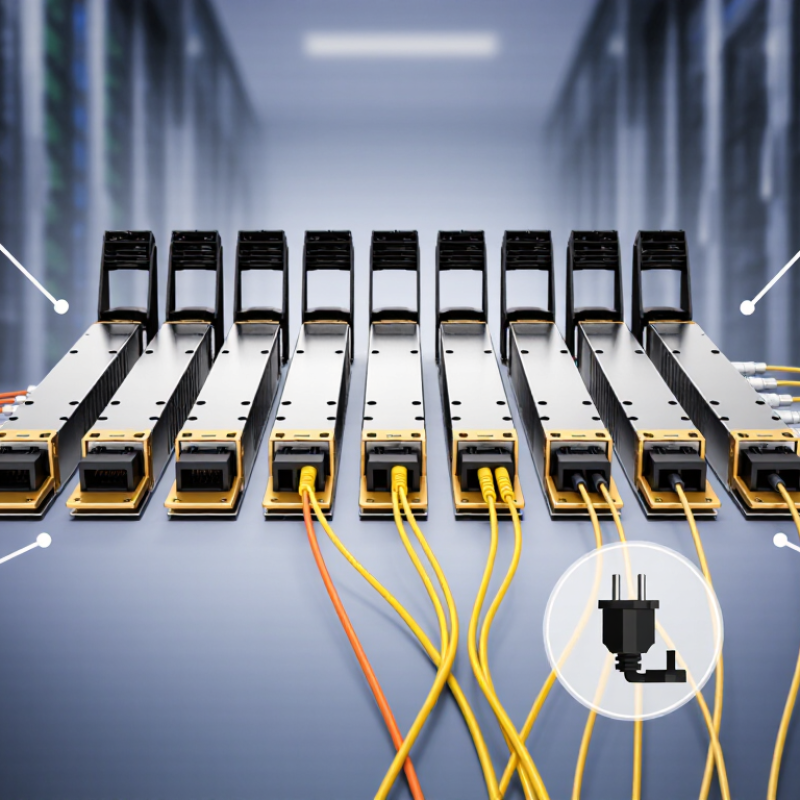
China Top 10 100G QSFP28 Module Manufacturers?

What Is a 100G QSFP28 Optical Module?

What Is a 100G QSFP28 Optical Module?

A 100G QSFP28 optical module is a compact transceiver that converts electrical signals from a network switch into optical signals, and back again. “QSFP” describes a four-lane pluggable form factor; “28” refers to the class of electrical signaling used per lane. Together, four lanes support an aggregate data rate of 100 gigabits per second. IEEE 802.3ba defines foundational 100GbE interfaces, while specific module types use different fiber and optical designs. For example, SR4 typically uses multimode fiber and an MPO connector; LR4 uses single-mode fiber and duplex LC. Check the host port, fiber, connector, and reach requirements before choosing a module.

The 2018–2023 Annual Internet Report forecast global IP traffic would reach 3.3 zettabytes per year by 2023, illustrating the pressure on data-center links. That figure was a forecast, not a measurement of actual traffic. A QSFP28 module helps meet high-capacity requirements in a small port footprint, but “100G” alone does not guarantee compatibility. Host-side coding, link distance, and fiber quality matter. Fit matters. A module may seat neatly yet fail to establish a link if its optical type or host requirements differ. In practice, technicians verify the port specification and inspect the fiber ends before troubleshooting the switch.

What Is a 100G QSFP28 Optical Module?

A QSFP28 is a compact transceiver form factor used for 100 Gigabit Ethernet links. The chart compares representative maximum reaches for common 100G optical interfaces; actual reach depends on the interface specification and fiber type.

Reach values shown: SR4 over OM4 multimode fiber, 100 m; PSM4 over single-mode fiber, 500 m; CWDM4 over single-mode fiber, 2 km; LR4 over single-mode fiber, 10 km; ER4 over single-mode fiber, 40 km.

How Are Chinese QSFP28 Manufacturers Evaluated?

A careful evaluation of Chinese QSFP28 manufacturers begins with evidence, not catalog claims. Check whether the module meets the required 100G application, fiber type, reach, and connector configuration. Request measured optical output, receiver sensitivity, and power consumption. A dependable supplier should provide clear test records and explain how each module is checked before shipment.

Compatibility matters in real equipment. Ask how the manufacturer verifies interoperability with your switches and routers, including digital diagnostics monitoring and alarm thresholds. Review operating-temperature ratings, firmware options, warranty terms, and technical response times. For a pilot order, test samples under your own traffic and temperature conditions. A neat specification sheet can still leave gaps; I would not treat it as proof of stable production. Batch consistency deserves attention.

Tips: Compare reports from several production batches, not just one sample. Confirm serial-number traceability and ask how failed units are investigated. Keep the questions specific. Vague answers are a signal to check further.

China Top 10 100G QSFP28 Module Manufacturers? - How Are Chinese QSFP28 Manufacturers Evaluated?
Evaluation Dimension Suggested Weight What to Verify Relevant Standard or Evidence
Standards and application compliance 15% Confirm that each offered module is specified for its stated 100G application and host interface. Check the exact part number, lane configuration, and compatibility requirements. Applicable IEEE 802.3 specifications; QSFP28 MSA and product datasheet. Compliance depends on the specific module type.
Optical performance 18% Review transmit power, receiver sensitivity, extinction ratio, wavelength, and bit-error-rate test results against the limits for the specific product. Product datasheet and test reports made under stated conditions; compare results with the applicable IEEE or MSA limits.
Reach and fiber compatibility 10% Verify the supported distance and fiber type for each SKU. Do not assume that all 100G QSFP28 modules have the same reach. Examples include 100GBASE-SR4 at up to 100 m over OM4, 100GBASE-LR4 at up to 10 km over single-mode fiber, and MSA-based designs such as CWDM4 (2 km) or PSM4 (500 m).
Interoperability 12% Check operation in the intended switch, router, or NIC, including host coding, firmware requirements, digital diagnostics, and any vendor qualification conditions. Documented interoperability testing, host-platform compatibility lists, and the applicable QSFP28 management interface, such as SFF-8636 where specified.
Reliability and operating conditions 10% Check operating-temperature range, power consumption, alarm behavior, and reliability data for the exact module model and intended deployment environment. SKU-specific datasheet, environmental test records, and clearly stated commercial or extended-temperature ratings; ranges vary by product.
Quality management and production testing 10% Assess documented quality controls, incoming component inspection, in-process tests, final inspection, and corrective-action procedures. Auditable quality-system documentation, such as an applicable ISO 9001 certificate, plus sample production and test records.
Manufacturing capacity and process control 8% Evaluate whether production capacity, process controls, and yield monitoring can support the required order volume and delivery schedule. Factory audit, process-control records, production capacity evidence, and consistency between sample and mass-production units.
Traceability and change control 5% Confirm that units can be traced by serial number or lot and that changes to components, firmware, or manufacturing processes are communicated. Sample labels, lot-level records, change-notification procedures, and agreed product-change controls.
Supply continuity and lead-time performance 5% Review quoted lead times, order history, component sourcing plans, and procedures for handling shortages or end-of-life components. Documented delivery records, supply-continuity plans, and written lead-time commitments; these should be checked against the buyer’s requirements.
Technical support and warranty terms 7% Compare response times, troubleshooting resources, return procedures, warranty coverage, and support for interoperability issues. Written support and warranty policies, escalation contacts, and documented RMA procedures.

Suggested evaluation framework only: the weights are illustrative, not market statistics. It does not identify or rank specific manufacturers. Compare suppliers using the same test conditions and verify claims against the exact product datasheet, test records, and purchase requirements.

Which Chinese Companies Make 100G QSFP28 Modules?

Chinese companies making 100G QSFP28 modules include optical transceiver manufacturers, contract producers, and suppliers focused on data-center connectivity. Many operate in manufacturing hubs such as Shenzhen, Wuhan, and Suzhou. Their products may support Ethernet links using standards such as 100GBASE-SR4, 100GBASE-LR4, or CWDM4, depending on the application.

The label “manufacturer” can be unclear. Some companies design and assemble modules in-house; others source key components or work with production partners. Ask for the module’s datasheet, operating temperature range, wavelength details, and interoperability test results. A close-up inspection can also help: check the label, connector type, and whether the optical interface matches your fiber plant.

Details matter. A short-reach SR4 module typically uses parallel multimode fiber and an MPO connector, while a long-reach design may use duplex single-mode fiber. Confirm compatibility with the switch, link distance, and host interface before ordering. Request a sample and test it in the actual network. Supplier directories can help build a shortlist, but listings do not prove manufacturing capability. I would verify the factory, test process, and warranty terms directly; paperwork alone is not enough.

What Products and Applications Do These Manufacturers Cover?

Manufacturers of 100G QSFP28 modules typically offer several optical options for different link distances. SR4 modules use parallel multimode fiber, often for short connections inside data centers. LR4 and CWDM4 models carry 100G over single-mode fiber, with different lane designs and reach targets. ER4 products may serve longer campus or metro links. Exact reach depends on fiber quality, connectors, and network design.

Their portfolios can also include passive direct-attach cables and active optical cables. These suit short rack-to-rack links where power use and cable handling matter. A data-center team might use DACs between nearby switches, then optical modules for links crossing a building. Practical details count: connector type, temperature range, power draw, and host-device compatibility can affect deployment. Check these before ordering.

Applications span leaf-spine switching, server uplinks, storage networks, and telecom aggregation. Some manufacturers also provide breakout options, such as connecting a 100G port to four 25G links. Useful, but not automatic. The switch must support the chosen configuration. Catalogs can appear comprehensive, yet testing and interoperability records may be uneven. That deserves a closer look. A product label alone cannot confirm stable performance across every network environment.

How Can Buyers Compare Suppliers and Select a Manufacturer?

When comparing 100G QSFP28 suppliers, start with the link, not the sales pitch. Match the module to the fiber and distance: SR4 commonly serves short multimode links, while LR4 supports longer single-mode runs. Check power draw, temperature range, digital diagnostics, and compatibility with your switch ports. Request sample units and test them in the intended equipment. A clean lab result is useful; stable performance across a full rack is better.

Demand context matters. Synergy Research Group reported 1,189 operational hyperscale data centers worldwide at the end of 2024, reflecting continued investment in large-scale infrastructure. For buyers, that makes dependable supply and repeatable quality practical concerns. Ask suppliers for lot-level test records, failure-rate data, production lead times, and clear warranty terms. Verify connector cleanliness and inspect module labels and packaging when samples arrive. Small details matter. Compare quoted specifications against measured power and optical performance, not only datasheets. I would still treat a single successful sample cautiously; it cannot prove every production batch will behave the same way.

FAQS

What is a 100G QSFP28 optical module?

It converts electrical signals into optical signals and back again. Four lanes provide an aggregate rate of 100 gigabits per second. A compact fit.

Does every 100G QSFP28 module work with every switch?

No. Check the host port specification, optical type, fiber, connector, and link distance. A module may fit physically but still fail to establish a link.

What is the difference between SR4 and LR4 modules?

SR4 typically uses multimode fiber and an MPO connector for shorter links. LR4 typically uses single-mode fiber and duplex LC connectors for longer links.

What should I check before ordering from a supplier?

Request a datasheet, temperature range, wavelength details, and interoperability test results. Confirm the factory and warranty terms directly. Paperwork alone is not proof.

What types of products do these suppliers commonly offer?

Options may include SR4, LR4, CWDM4, and ER4 optical modules. Some also supply direct-attach and active optical cables for short rack-to-rack connections.

Where are 100G QSFP28 modules commonly used?

They can connect switches, servers, and storage networks. Data centers may use short cables between nearby racks and optical links across a building.

Can one 100G port connect to four 25G links?

Some systems support this breakout configuration. The switch must support it, and the selected module and cabling must match. Do not assume it is automatic.

Does a forecast about network traffic prove actual traffic levels?

No. One cited report forecast 3.3 zettabytes of annual global IP traffic by 2023. A forecast is not a measured result, and I would keep that distinction clear.

Conclusion

A 100G QSFP28 module is a compact, high-speed optical transceiver designed to support 100-gigabit data transmission in data centers, enterprise networks, and telecommunications infrastructure. Chinese manufacturers offer a range of module types suited to different transmission distances, fiber configurations, and network environments. Their products may serve applications such as data-center interconnects, switches, and high-capacity backbone links, with specifications varying by model.

Evaluating suppliers involves looking beyond product range. Buyers can compare technical compatibility, transmission performance, quality-control processes, testing and certification documentation, production capacity, delivery arrangements, warranty terms, and technical support. It is also useful to confirm that a module works with the intended networking equipment and meets the project’s requirements for distance, fiber type, and operating conditions. A clear comparison of these factors helps buyers identify a suitable manufacturer and balance performance, reliability, and total ownership cost.

Liam

Liam

Liam is a dedicated marketing professional with a profound expertise in the industry, where he excels at highlighting the unique advantages of our core products. With a keen understanding of market trends and consumer needs, Liam frequently updates our company’s professional blog, providing......