Fibronexa Fibronexa

Which 40G QSFP+ Transceiver Is Best in 2026?

Time:2026-11-03 Author:Amelia
0%

Choosing the best 40G QSFP+ transceiver in 2026 depends less on a product label and more on the link you need to build. A short connection between switches in one rack has different demands from a fiber run across a campus. The wrong optic can mean failed links, wasted budget, or another maintenance visit. Small details matter.

For short multimode runs, a 40GBASE-SR4 module typically uses an MPO connector and parallel fiber. Longer single-mode connections often call for LR4 optics with duplex LC connectors. Copper DAC cables can suit nearby equipment, while active optical cables offer reach without separate transceivers. These are starting points, not a universal ranking. Check the required distance, fiber type, connector, and switch compatibility before comparing prices.

We will look at those trade-offs, along with power use, digital diagnostics, operating conditions, and vendor support. A module may meet the headline speed yet still fail to work with a particular switch. Confirm compatibility with the equipment maker or supplier, and review the product datasheet rather than relying on a listing alone. That extra check can save time. I would not call any model “best” without knowing the network’s exact needs; even a careful checklist can miss a site-specific constraint. The aim here is a practical shortlist, with enough context to choose confidently—and to know what still needs verifying before installation.
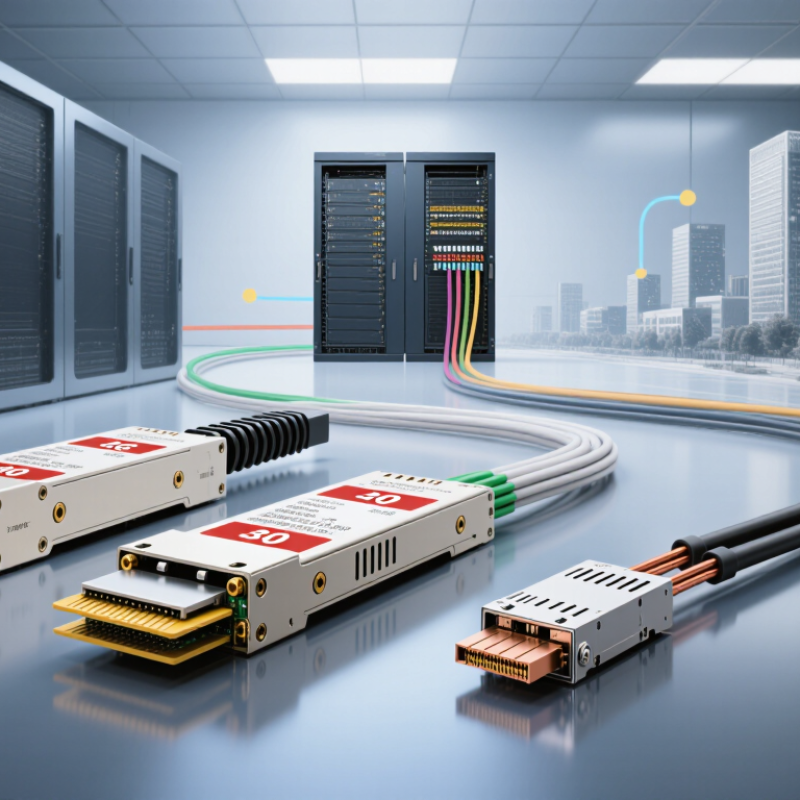
Which 40G QSFP+ Transceiver Is Best in 2026?

Define QSFP+: IEEE 802.3ba 40GbE Uses Four 10.3125-Gb/s Lanes

QSFP+ is a compact transceiver form factor used for 40GbE links. Under IEEE 802.3ba, a 40GbE connection carries data across four lanes, each running at 10.3125 Gb/s. Together, these lanes provide the signaling capacity needed for a 40-gigabit Ethernet link.

Four lanes matter.

The 10.3125-Gb/s figure is not the same as useful payload speed. Ethernet encoding adds overhead, so the aggregate signaling rate is higher than the nominal 40 Gb/s data rate.

In practice, a QSFP+ module converts electrical signals from the host port into optical signals, or the reverse. The exact conversion depends on the module type.

For example, a short-reach parallel-optics module may use four optical lanes and a multifiber connector. A longer-reach design may combine wavelengths for transmission over a duplex fiber pair.

These options are not interchangeable just because they share the QSFP+ shape. Check the fiber type, connector, reach, and switch compatibility before choosing.

The naming still trips people up: “40G” describes the Ethernet link, while the lane rate describes signaling on each path. Even a correct specification sheet cannot prevent every mismatch in a real installation.

Compare SR4 (150 m OM4), LR4 (10 km) and ER4 (40 km) Optics

Choosing a 40G QSFP+ optic starts with distance and installed fiber, not the module label alone. SR4 suits short data-center links, reaching up to 150 meters over OM4 multimode fiber. It uses parallel fibers and an MPO connector, so check polarity and the existing patch-panel path. Small details matter.

LR4 is designed for links up to 10 kilometers over single-mode fiber, typically through duplex LC connectors. It combines four optical lanes onto two fibers, which can simplify cabling between buildings or across a campus. Before installation, confirm the host accepts the module and inspect the route’s total loss. A long cable run with several aging connectors may not behave like a clean lab link.

ER4 extends the reach to 40 kilometers over single-mode fiber. That distance is useful for longer metro or campus connections, but reach figures assume suitable link conditions. Measure the optical budget, account for every splice and connector, and verify the receiving equipment’s limits. The awkward part is that a link can appear healthy at first, then show errors as conditions change. I would test with the actual fiber route, not just trust the datasheet.

Match Fiber and Connectors: SR4 Uses 8 Fibers; LR4 Uses Duplex LC

For a 40G link, connector choice is not cosmetic; it determines the cabling path and reach. IEEE 802.3ba-2010 specifies 40GBASE-SR4 for multimode fiber, reaching up to 100 m on OM3 and 150 m on OM4. SR4 uses eight active fibers: four transmit and four receive. They occupy eight positions in a 12-fiber MPO connector. Check polarity and fiber mapping before installation. A wrong lane map can leave a clean-looking link dark.

40GBASE-LR4 is designed for single-mode fiber and reaches up to 10 km under the same IEEE specification. It uses a duplex LC connector: one fiber sends, the other receives. Four wavelengths share each fiber through wavelength-division multiplexing. This makes LR4 a practical fit for longer campus or building links, while SR4 can suit short connections between nearby switches. Reach alone is not enough; fiber type and connector must match.

Tips: Confirm the cable plant before ordering. Count the active SR4 fibers, verify MPO polarity, and check that LR4 links use duplex LC single-mode cabling. I would still inspect the equipment’s port requirements; connector appearance can mislead. Verify the details.

Compare DAC and AOC: 40GBASE-CR4 Copper Links Reach Up to 7 m

For short 40G links, a 40GBASE-CR4 QSFP+ DAC can be the practical choice. Its four copper lanes carry 10 Gb/s each, connecting compatible switches or servers without separate optical modules. In a rack, a cable run of a few metres can keep the setup simple and avoid extra power draw from active optics. Some CR4 DAC options reach up to 7 m, but confirm the cable specification and device compatibility before ordering.

That distance matters. Measure the actual route, including slack for bends and service access; a six-metre cable may not suit a path that looks shorter on a diagram. DACs are usually cost-effective for nearby equipment, though thicker copper can be awkward in crowded racks. An AOC is lighter and better suited to longer runs or electrically noisy areas, but it generally costs more and has fixed optical ends. No option wins everywhere. For links near the 7 m limit, verify the exact reach and supported cable type with both device vendors. I would not assume every QSFP+ port accepts every CR4 cable; that is an easy detail to miss.

Which 40G QSFP+ Transceiver Is Best in 2026? — Compare DAC and AOC: 40GBASE-CR4 Copper Links Reach Up to 7 m
Connection type Medium and interface Typical reach Best suited for Key trade-offs
40GBASE-CR4 passive DAC Four-lane twinaxial copper cable with QSFP+ ends Up to 7 m for 40GBASE-CR4 Short connections within or between adjacent racks Low-cost, low-power, plug-and-play cabling; relatively thick and less flexible than fiber.
Active DAC Twinaxial copper cable with signal-conditioning electronics Model-specific; confirm the cable’s rated reach Short copper links where an active cable is required by the design Can support cable designs that passive DAC cannot; uses more power than passive DAC. Do not assume every active cable meets the 40GBASE-CR4 7 m limit or standard.
40G QSFP+ AOC Multimode optical fiber with integrated QSFP+ ends Available lengths vary by product; many applications use links from a few metres to tens of metres Rack-to-rack or other longer links where a lightweight cable is useful Lighter and more flexible than copper; the optical ends are integrated into the cable, so the assembly is not a pair of separately replaceable transceivers.
40GBASE-SR4 QSFP+ optics QSFP+ optical transceivers and parallel multimode fiber, typically using an MPO/MTP-style connector Up to 100 m on OM3 or 150 m on OM4 multimode fiber Longer 40G links where separate, replaceable optical modules are preferred Requires compatible fiber and connectors; the transceivers and fiber are separate components.

All options provide a nominal 40 Gb/s link. Actual compatibility, supported cable lengths, and reach depend on the specific equipment and cable or optic specifications; check both endpoints’ documentation before deployment.

Evaluate 2026 Choices by Link Reach, Switch Compatibility and Cost

For a 40G QSFP+ link, reach should decide the optic before price does. IEEE 802.3ba specifies up to 100 meters on OM3 multimode fiber for 40GBASE-SR4, or 150 meters on OM4. For single-mode fiber, 40GBASE-LR4 supports links up to 10 kilometers. These figures are useful planning limits, not guarantees for aging cabling or poor connections. Measure the actual route.

Switch compatibility can narrow the shortlist fast. Check the platform’s supported transceiver list, software version, port mode, and whether it accepts third-party modules. Also confirm the connector and fiber type: SR4 uses parallel fiber with an MPO connector, while LR4 typically uses duplex single-mode fiber. Small details matter. A module that fits physically may still be rejected by switch software.

Cost means more than the module’s purchase price. Include fiber installation, patch panels, power draw, and the cost of replacing an incompatible optic. For short data-center runs, SR4 may be economical when multimode cabling is already installed; LR4 can make more sense across buildings. IEEE 802.3ba provides the reach benchmarks, but local compatibility checks remain essential. They are sometimes tedious. That part is easy to underestimate.

FAQS

What is QSFP+ used for?

QSFP+ is a compact transceiver form factor for 40GbE links. It converts electrical signals into optical signals, or back again. Four lanes matter.

How do the four lanes carry a 40GbE link?

Each lane signals at 10.3125 Gb/s. Together, four lanes support the link’s signaling capacity.

Is 10.3125 Gb/s the useful payload speed?

No. Ethernet encoding adds overhead, so signaling capacity differs from nominal data rate. The distinction is easy to miss.

What fiber and reach does 40GBASE-SR4 support?

SR4 uses multimode fiber, reaching up to 100 m on OM3 or 150 m on OM4. Check the cable grade.

What connector and fiber count does SR4 need?

It uses eight active fibers in a 12-fiber MPO connector: four transmit and four receive. Verify polarity and lane mapping. Check twice.

What cabling does 40GBASE-LR4 use?

LR4 uses single-mode fiber and a duplex LC connector. One fiber sends, and one receives. It can reach up to 10 km.

How does LR4 transmit multiple signals over two fibers?

Four wavelengths share each fiber through wavelength-division multiplexing. The setup differs from SR4, despite the shared QSFP+ form factor.

What should be checked before choosing a module?

Match fiber type, connector, reach, and switch-port requirements. Inspect the cable path and lane mapping, too. Looks can deceive.

Conclusion

Choosing the best 40G QSFP+ transceiver in 2026 starts with the link distance, fiber type, and switch requirements. Based on IEEE 802.3ba, 40GbE uses four lanes operating at 10.3125 Gb/s each. For short links, SR4 optics can reach up to 150 meters over OM4 fiber and use eight fibers. LR4 optics support links up to 10 kilometers over duplex single-mode fiber with LC connectors, while ER4 optics extend reach to as much as 40 kilometers.

Copper and active optical cables offer alternatives when separate transceivers and fiber connections are not ideal. A 40GBASE-CR4 DAC can connect compatible equipment over distances up to 7 meters, while an AOC may suit longer direct connections. Compare each option by required reach, cabling, power needs, switch compatibility, and total cost. The most suitable 40G QSFP+ transceiver is the one that meets the link requirements reliably without adding unnecessary expense.

Amelia

Amelia

Amelia is a seasoned marketing professional with a wealth of expertise in our company’s core offerings. With an unwavering passion for driving growth and innovation, she plays a pivotal role in shaping our marketing strategies and enhancing brand visibility. A key aspect of her responsibilities......