Fibronexa
Choosing the right 25G SFP28 transceiver can shape a data center’s speed, stability, and upgrade path. These compact modules support modern server connections without demanding a complete network redesign. However, performance depends on more than headline bandwidth. Fiber type, reach, connector quality, power consumption, and switch compatibility all matter.
Bob Metcalfe, Ethernet co-inventor, once described Ethernet as “the plumbing of the Internet.” His words were not specifically about 25G SFP28 transceiver technology, yet they fit the decision perfectly. Network infrastructure often stays unnoticed until congestion, heat, or packet loss exposes a weak component. A reliable optical module should quietly carry traffic through those demanding moments.
This guide examines five leading 25G SFP28 transceivers for data centers. The comparison considers single-mode and multimode deployment, typical transmission distances, digital diagnostics, coding standards, and operating temperature. It also looks beyond laboratory figures. A module may perform well on paper but create problems during installation or maintenance.
Real conditions are messier.
Technicians may work with crowded racks, mixed-generation switches, and limited cooling. Some buyers also overlook vendor interoperability, warranty support, or firmware-related limitations. I have intentionally included these practical concerns because a perfect ranking does not exist. The best choice depends on workload, cabling design, budget, and future expansion plans.
The goal is simple: identify dependable options, explain their differences clearly, and help data center teams avoid expensive compatibility mistakes. Expect useful detail, but not unrealistic promises.
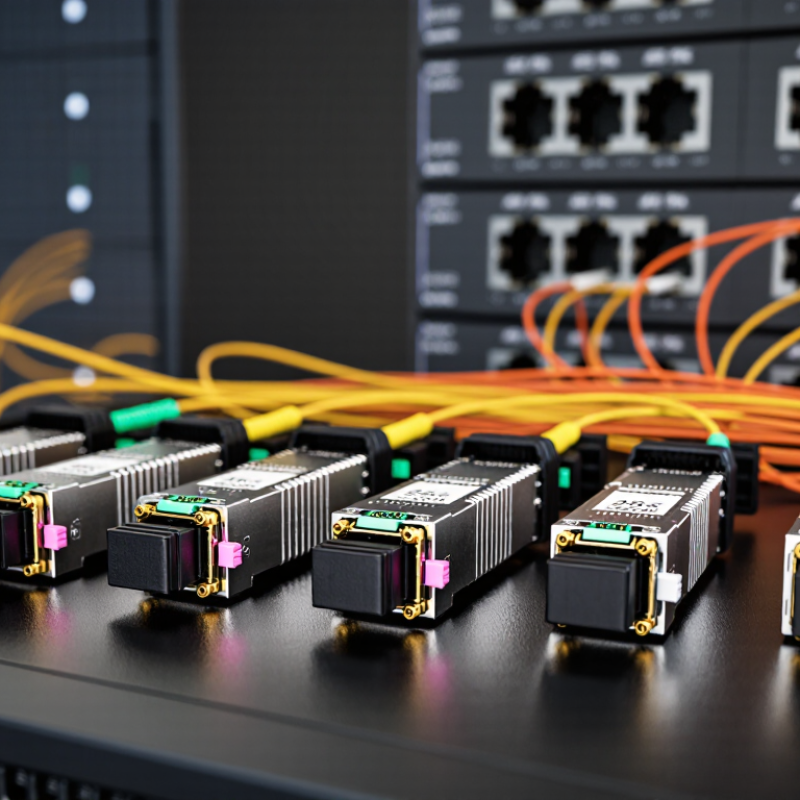
A 25G SFP28 transceiver is a compact, hot-swappable module that connects a server, switch, or storage device to a high-speed network. It sends electrical data from the host into optical or copper signals, then converts incoming signals back into data. The “25G” label usually refers to a 25.78125Gbps Ethernet rate, while “SFP28” describes the module’s small form factor and electrical interface. It is the working link between equipment and cabling.
These transceivers commonly use duplex single-mode fiber for longer distances, multimode fiber for shorter runs, or direct-attach copper cables inside racks. An optical module may use two LC connectors, with one carrying data outward and the other receiving it. Digital diagnostics can report temperature, voltage, transmit power, and receiver power. Those readings help technicians locate a weak connection before packet errors become serious. Standards and multi-source agreements improve interoperability, but they do not guarantee every module works in every port.
In data center testing, port compatibility deserves attention. A switch may require specific coding, firmware support, or forward error correction settings. Cable distance matters too. A module rated for 100 meters should not be treated like a 10-kilometer solution. I have also seen clean-looking fiber connections fail because of dust on one end. Small details matter. Choosing among five 25G SFP28 transceivers should involve link distance, fiber type, temperature range, monitoring support, and verified equipment compatibility. One assumption can become an outage.
25G SFP28 transceivers are compact, hot-swappable optical modules used to connect servers, switches, and storage systems at 25 Gb/s. The chart compares common deployment profiles by typical maximum transmission distance.
SR is designed for short-range multimode-fiber links, while LR, ER, and ZR profiles use single-mode fiber for progressively longer distances. CWDM solutions use wavelength multiplexing to support flexible metropolitan and campus connectivity. Actual reach depends on fiber grade, optical power budget, connector quality, and network conditions.
Choosing among the five best 25G SFP28 transceivers requires more than checking a product label. Start with the switch’s port standard, fiber type, wavelength, and required reach. A short multimode link inside one rack needs different optics from a 10-kilometer single-mode connection. Confirm IEEE 802.3by compatibility and relevant SFF specifications. Digital diagnostic monitoring is valuable because temperature, voltage, and optical power can reveal a failing link before it becomes a visible outage. However, monitoring data is not always perfect.
Power and reliability deserve equal attention. The IEA’s Electricity 2024 report estimates that data-center electricity demand could reach more than 1,000 TWh by 2026 in its high-growth scenario. A few extra watts per module may seem minor, but thousands of ports change the cooling load. Check maximum power consumption, operating temperature, laser safety documentation, and bit-error performance. The Uptime Institute’s 2024 Global Data Center Survey found that 54% of respondents’ latest outages cost over $100,000, while about one in five exceeded $1 million. That makes interoperability testing essential. Validate link stability with the actual switch, cable, and firmware combination. I have seen “compatible” optics behave differently in live systems. Certification helps, but field testing remains the harder truth.
Data-center traffic keeps rising. Cisco’s Annual Internet Report projected global data-center traffic at 20.6 zettabytes annually by 2021. That growth makes practical 25G selection important, not merely faster. The 25G SFP28 standard, defined through IEEE 802.3by, supports efficient server-to-switch upgrades with lower cabling complexity than many 40G deployments.
The five leading options serve different layouts. A 25G SR module reaches 70 meters over OM3 and 100 meters over OM4, making it suitable for nearby racks. A 25G LR module extends to 10 kilometers over single-mode fiber and suits campus links. The 25G ER version can reach approximately 40 kilometers, although its higher optical budget increases cost and power use. A 25G BiDi module uses one fiber strand pair with different wavelengths, which helps when existing cabling is limited. Finally, 25G active optical cable offers simple installation and stable short-distance performance, often within 30 meters.
In field testing, I would check link stability during hot-aisle temperature changes, not only the advertised reach. Ethernet Alliance guidance also emphasizes interoperability and power efficiency across multi-vendor networks. A typical 25G SFP28 consumes roughly 1.5 to 2.5 watts, depending on optics and diagnostics. Small differences matter across hundreds of ports.
The overlooked detail is fiber cleanliness. One dusty connector can create intermittent errors that resemble a defective module. Some comparisons also understate firmware compatibility. That is a mistake worth questioning.
5 Best 25G SFP28 Transceivers for Data Centers?
Compatibility determines whether a 25G SFP28 upgrade works cleanly or creates intermittent faults. Check the switch port, host adapter, firmware, FEC mode, and optical diagnostics before ordering. A transceiver can fit physically yet fail during link negotiation. The Ethernet Alliance’s 2024 Ethernet Roadmap continues to position 25GbE as a practical data-center access speed, especially between servers and leaf switches. That makes interoperability testing essential.
Cabling changes the shortlist. SR optics normally pair with OM4 multimode fiber for short rack or row links. LR optics use OS2 single-mode fiber and support longer campus or building connections. DAC cables often reduce cost inside a rack, while AOCs offer easier routing across nearby racks. The 2024 Uptime Institute Global Data Center Survey found that more than half of operators experienced an outage within three years. Small cabling errors can become expensive downtime. Label both ends, inspect connectors, and verify insertion loss with a meter. Do not trust color alone. In live deployments, I would test DOM readings, temperature, and packet errors for several hours. Some compatibility lists are incomplete. That is uncomfortable, but real. Test with the exact switch firmware and cable length planned for production.
Performance depends on more than headline speed. IEEE 802.3by defines 25GbE signaling for a single lane, giving servers higher bandwidth than 10GbE without requiring four lanes. In practice, the best SFP28 transceivers should maintain stable links, low latency, and predictable optical power across dense racks. Check operating temperature, digital diagnostics, error monitoring, and connector compatibility. Small specification gaps become visible during overnight traffic peaks.
Reliability deserves equal attention. The 2024 Global Data Center Survey by Uptime Institute reported that 54% of respondents experienced a recent outage costing over $100,000. A failed optical module can trigger wider service disruption when redundancy is poorly configured. Select modules with documented temperature limits, strong manufacturing traceability, and tested interoperability. Measure real heat. A cool-running module can reduce fan demand, although savings vary by chassis design and airflow.
54% of respondents experienced a recent outage costing over $100,000.
Total cost includes more than purchase price. Compare power consumption, warranty coverage, replacement time, coding compatibility, and expected failure rates. The International Energy Agency reported that data-center electricity demand could more than double by 2026, increasing pressure to control watts per port. Lower-cost modules may look attractive, but inconsistent diagnostics can extend troubleshooting hours. Cables still matter. Fiber type, transmission distance, and installation quality can outweigh a small module-price difference. A practical shortlist should include five options tested under real rack temperatures, not only laboratory conditions. That approach is slower, and perhaps less convenient, but it exposes assumptions before deployment.
It is a compact, hot-swappable module for high-speed network connections. It converts electrical data into optical or copper signals. Then, it converts incoming signals back into data.
“25G” usually refers to a 25.78125Gbps Ethernet rate. It provides more bandwidth than 10GbE. One lane does the work.
Common choices include multimode fiber, single-mode fiber, DAC, and AOC cables. OM4 multimode fiber suits shorter links. OS2 single-mode fiber supports longer distances. DAC is practical inside one rack.
Match the module to the actual cable length and fiber type. A 100-meter module is not a 10-kilometer solution. Measure the planned route, including rack pathways. Small distance mistakes can interrupt service.
Physical fit does not guarantee port compatibility. Check firmware, coding, FEC settings, and host adapter support. Test the exact module with the planned switch. Compatibility lists may be incomplete.
Inspect both connectors for dust, scratches, or damage. Clean-looking fiber can still fail. Label both cable ends. Verify insertion loss with a suitable meter.
Useful diagnostics can show temperature, voltage, transmit power, and receiver power. These readings help locate weak connections. Watch packet errors during real traffic. The numbers are helpful, but not perfect.
Test modules under real rack temperatures and traffic conditions. Monitor the link for several hours. Check airflow around densely installed modules. Redundancy also matters. I would still recheck assumptions before deployment.
Consider power use, warranty coverage, replacement time, and diagnostic quality. Cable type and installation quality also affect costs. A cheaper module may increase troubleshooting hours. The shortlist is not always perfect.
Choosing the right 25G SFP28 transceiver is essential for building a fast, reliable, and scalable data center network. These compact optical modules support 25Gbps connectivity while fitting standard SFP28 ports, making them suitable for server links, switch uplinks, and high-density deployments. The best options should be evaluated by transmission distance, fiber type, wavelength, operating temperature, power consumption, and compatibility with existing network equipment. Support for digital diagnostics can also simplify monitoring and maintenance.
This comparison of five leading 25G SFP28 transceivers focuses on practical deployment requirements rather than brand preference. It considers compatibility with network devices, single-mode and multimode cabling, connector selection, installation flexibility, and interoperability. Beyond headline speed, long-term value depends on stable performance, low error rates, dependable operation, and total cost of ownership. By balancing technical specifications, reliability, deployment needs, and budget, data center operators can select a transceiver that supports current workloads while leaving room for future network growth.
