Fibronexa
Choosing the right pluggable optical transceiver in 2026 requires more than comparing speed and price. Buyers must match the module with switch ports, fiber type, transmission distance, power limits, and network architecture. A 400G module may look attractive, yet it can create unnecessary cost in a smaller data center.
This guide examines the leading pluggable optical transceiver types available for modern networks. It covers multimode and single-mode options, including SR, DR, FR, LR, and breakout designs. Each type serves a different distance and deployment need. For example, an SR module may suit a short rack connection, while an LR module can support longer links across buildings. Connector design also matters. LC, MPO, and duplex configurations affect installation time and cable management.
Real-world buying decisions need evidence. Check the manufacturer’s data sheet, operating temperature range, digital diagnostics, power consumption, and compatibility list. Independent testing is valuable, especially when third-party modules must work with equipment from several vendors. Firmware behavior can be overlooked. That mistake becomes expensive later.
No guide is perfect.
Optical performance also depends on clean connectors, accurate polarity, and proper fiber inspection. Buyers should review total ownership costs, not only the initial unit price. A lower-cost transceiver may consume more power or require additional troubleshooting. Standards evolve, and product labels can sometimes cause confusion. This overview therefore treats specifications as practical starting points, not absolute guarantees. It encourages careful validation before purchase, helping network teams select reliable modules for capacity, distance, resilience, and future expansion.
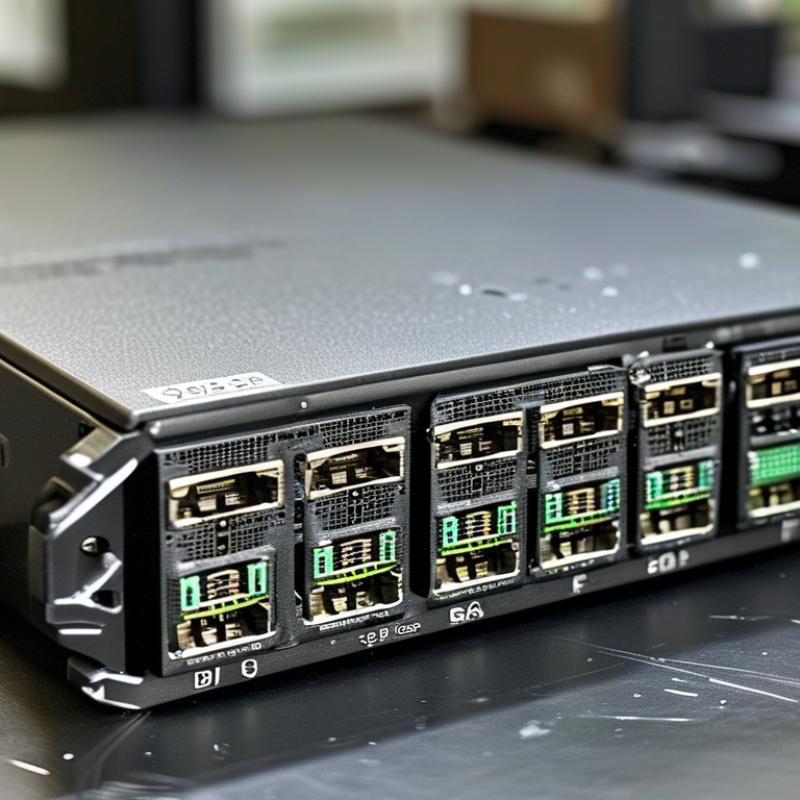
Pluggable optical transceivers are removable network modules. They convert electrical signals into optical signals and back again. A technician can replace one without changing the entire switch or router. This makes upgrades faster and reduces service interruptions. The module is not simply a cable. It combines optics, electronics, firmware, and monitoring functions. Small details can affect network stability.
Common types include SFP, SFP28, QSFP, QSFP28, QSFP-DD, and OSFP. Their differences involve data rate, lane count, power use, and physical size. A single-lane module may support access links or moderate-speed connections. A multi-lane module can carry much higher traffic through parallel optical channels. Some versions use copper connections for short distances. Others use single-mode or multimode fiber for different reach requirements.
A reliable buying decision starts with the host device. Check port shape, supported speed, coding requirements, and maximum power. Then verify wavelength, fiber type, connector, operating temperature, and transmission distance. Digital diagnostics can report temperature, voltage, and optical power. Those readings help technicians find weak links before failure occurs. Field deployments also teach a less comfortable lesson: published distance is not guaranteed in every network. Dirty connectors, sharp fiber bends, and poor patch panels can reduce performance. I would verify compatibility in a test port before ordering large quantities.
Pluggable optical transceiver form factors differ mainly in size, electrical lanes, cooling needs, and port density.
Small form-factor modules suit access switches and compact servers. Enhanced versions support higher rates while keeping a similar cage footprint. Quad-lane modules carry four electrical channels, often reaching 40G, 100G, or 200G. Newer double-density designs can use eight lanes for 400G and beyond. Bigger cages may offer better thermal performance, but they consume more front-panel space.
Physical fit is only the beginning.
A module must match the host cage, electrical signaling, optical reach, and software support. A four-lane module may support breakout into separate lower-speed links, which helps connect older equipment. However, breakout wiring adds installation complexity.
Heat also matters. In a crowded rack, airflow can decide whether a high-speed optic operates reliably.
I have seen deployment plans fail because port spacing was checked, but power and temperature were ignored. That mistake is easy to repeat.
Tips:
Check the switch datasheet, cage type, lane mapping, and maximum module power before buying. Compare connector placement with the rack’s cable path. Test one module under real traffic and normal airflow. Do not assume identical speeds guarantee compatibility. Standards evolve, and firmware behavior can vary. A careful trial may feel slow, but replacing dozens of mismatched modules is slower.
In 2026, 800G pluggable transceivers will likely lead high-density data center upgrades. Their appeal is practical: fewer ports can carry more traffic through a shorter, cleaner front panel. OSFP and QSFP-DD form factors will remain important because many switches already support them. Single-mode 800G modules should dominate longer data center links. Multimode options may still fit short connections. Small correction: speed alone does not guarantee value.
Coherent pluggables will gain ground in metro networks and regional data centers. 400ZR, 800ZR, and extended-reach variants can simplify connections between sites. They reduce dependence on separate transport equipment in some designs. Buyers should examine reach, optical budget, power draw, and line-system compatibility. A module rated for 80 kilometers may perform differently across real fiber routes. Field measurements matter.
Lower-speed 400G modules will not disappear in 2026. They can offer a sensible upgrade path for facilities with limited power or older cabling. I would avoid choosing 1.6T modules only for future headlines. Thermal testing remains essential, especially inside densely packed switch cabinets. Check interoperability with network software, monitoring tools, and host ports before purchasing. The best type will depend on traffic patterns, distance, cooling capacity, and verified deployment data. Forecasts can be wrong. Practical testing should have the final word.
For 2026, buyers should match pluggable optical transceivers to network requirements, not marketing labels. Start with port speed, traffic growth, and actual link distance. An SFP+ may suit a 10Gbps server connection, while SFP28 supports 25Gbps access designs. Higher-density links often require QSFP28, QSFP56, QSFP-DD, or OSFP modules. The fastest option is not always the most practical.
Distance and fiber type deserve careful checking. Multimode fiber can serve short data-center links, often with lower deployment costs. Single-mode fiber is better for longer connections between buildings or network rooms. Confirm the required wavelength, connector, and transmission distance before ordering. A mismatch may cause weak signals, unstable links, or complete failure. I still verify the optical budget manually, even when a product table appears clear.
Power consumption also affects the decision. Dense switches may overheat when every port uses a high-power module. Check operating temperature, digital diagnostics, coding support, and host-port compatibility. Breakout designs need special attention because one high-speed port may divide into several lower-speed links. Interoperability testing is valuable, but field conditions can differ from laboratory results. A small pilot deployment can reveal unexpected alarms, thermal limits, or fiber losses before a wider installation. That extra step feels slow. It often prevents an expensive replacement cycle.
The chart compares common pluggable optical transceiver classes by their typical Ethernet line rate. SFP and SFP28 are generally used for 1G and 25G access or server links, while QSFP28 and QSFP56 support 100G and 200G data-center connections. QSFP-DD and 800G-class modules are designed for high-density 400G and 800G spine, AI, and hyperscale network deployments. Buyers should also verify host-port compatibility, fiber type, optical reach, connector, power consumption, and interoperability before selecting a transceiver.
2026 Top Pluggable Optical Transceiver Types for Buyers
Compatibility begins with the host port, not the transceiver label. SFP, SFP+, SFP28, QSFP+, QSFP28, QSFP-DD, and OSFP modules serve different electrical and mechanical requirements. A 100G module may fit physically, yet fail because the switch expects another lane structure or coding method. Check the port specification, supported speed, firmware, and breakout options before ordering.
Performance depends on more than headline bandwidth. Fiber type, wavelength, connector, transmission distance, and network topology all matter. A short-reach multimode module may suit a server room, while a single-mode option handles longer campus links. Power consumption also affects dense installations. Higher optical output can increase reach, but it may raise heat and operating costs. Monitor readings such as temperature, voltage, and received power when available.
Cost comparisons often miss installation details. A low-priced optic can require special cabling, extra cooling, or early replacement. Verify operating temperature, digital monitoring, warranty terms, and interoperability testing. In practical deployments, matching both ends of the link is essential. I have seen a link fail after a simple wavelength mismatch. It looked compatible. It was not. Compatibility lists help, but they are not perfect. Test a sample under real traffic before committing to a large purchase. That extra step feels slower, yet it can prevent expensive downtime and rushed replacements.
| Transceiver Type | Common Ethernet Rate | Electrical Host Interface | Typical Optical Lanes | Typical Reach Options | Common Fiber Type | Typical Power Range | Compatibility Considerations | Performance Profile | Relative Cost Level | Best-Fit Applications |
|---|---|---|---|---|---|---|---|---|---|---|
| SFP | 1 Gb/s | Single-lane serial | 1 optical lane | Up to approximately 100 km, depending on wavelength and optic design | Multimode or single-mode fiber | Typically below 1.5 W | Requires a compatible 1 Gb/s port, supported wavelength, fiber mode, connector, and link budget | Mature and reliable for low-speed access and aggregation links | Low | Access networks, storage links, industrial Ethernet, and legacy switching |
| SFP+ | 10 Gb/s | Single-lane serial | 1 optical lane | Typically 300 m to 80 km, depending on multimode or single-mode design | Multimode or single-mode fiber | Typically below 1.5 W | A 10 Gb/s SFP+ cage is required; some systems support lower-rate operation, but this must be verified | Low latency, broad deployment base, and good thermal efficiency | Low | Enterprise uplinks, data-center leaf connections, and telecom access equipment |
| SFP28 | 25 Gb/s | Single-lane serial | 1 optical lane | Commonly 70 m to 10 km; longer reaches are available for selected designs | Multimode or single-mode fiber | Typically below 2 W | The host must support 25 Gb/s signaling, FEC requirements, and the selected optical specification | Higher port density and bandwidth than 10 Gb/s with relatively low power | Low to Medium | 25 Gb/s server connections, data-center access, and short-reach aggregation |
| QSFP+ | 40 Gb/s | 4 × 10 Gb/s electrical lanes | 4 × 10 Gb/s optical lanes or parallel-optic implementation | Usually 100 m to 10 km | Multimode or single-mode fiber | Typically below 3.5 W | Port breakout mode, lane mapping, FEC, and connector type must match the switch or server configuration | Good aggregate throughput with four-lane architecture | Low to Medium | 40 Gb/s aggregation, legacy data-center interconnects, and breakout connections |
| QSFP28 | 100 Gb/s | 4 × 25 Gb/s electrical lanes | 4 × 25 Gb/s optical lanes or single-wavelength 100G design | Typically 70 m to 10 km; extended-reach variants may go farther | Multimode or single-mode fiber | Typically below 4.5 W | Confirm 100G mode, lane arrangement, FEC, wavelength, connector, and whether breakout to 4 × 25G is supported | Strong balance of bandwidth, power, density, and ecosystem maturity | Medium | Data-center leaf-spine links, server aggregation, and short-to-medium interconnects |
| QSFP56 | 200 Gb/s | 4 × 50 Gb/s electrical lanes | 4 × 50 Gb/s optical lanes or parallel 200G architecture | Commonly 70 m to 2 km for data-center optics | Multimode or single-mode fiber | Typically below 6 W | The host must support 50G-per-lane signaling and the appropriate FEC and breakout profile | High bandwidth in a compact four-lane form factor | Medium to High | High-density data-center interconnects and 200G aggregation |
| QSFP-DD | 400 Gb/s; also available in 200G and lower-rate configurations | 8 electrical lanes, commonly 50G or 100G per lane | 4 or 8 optical lanes, depending on the optical design | Typically 100 m to 10 km for client optics; longer reaches require specialized designs | Multimode or single-mode fiber | Typically 10 W to 15 W for 400G optics | Verify module generation, lane speed, FEC, firmware support, cage thermal limits, and breakout capability | Very high density and flexible support for multiple Ethernet rates | High | 400G data-center spine links, high-performance computing, and scalable cloud infrastructure |
| OSFP | 400 Gb/s and above, depending on implementation | Typically 8 electrical lanes at high signaling rates | 4 or 8 optical lanes, depending on the module design | Typically 100 m to 10 km for client optics; extended reaches are application-specific | Multimode or single-mode fiber | Often up to approximately 15 W or more, subject to platform design | OSFP and QSFP-DD are different mechanical form factors; cage, thermal design, firmware, and port specification must match | High thermal headroom and strong support for high-speed, high-density links | High | High-capacity switching, artificial intelligence clusters, and next-generation data centers |
| Coherent Pluggable | 100G to 800G class, depending on modulation and optical design | High-speed host interface with digital signal processing | Single or dual coherent optical carrier, depending on design | Approximately 80 km to several hundred kilometers in suitable line systems | Single-mode fiber with compatible optical line system | Typically above 10 W; exact value depends on rate, reach, and form factor | Requires matching host rate, coherent line system, modulation, baud rate, FEC, wavelength plan, and thermal budget | Long reach, high spectral efficiency, and advanced performance monitoring | Very High | Metro networks, data-center interconnects, regional transport, and optical transport platforms |
: They differ in size, lane count, cooling needs, and port density. Small modules suit compact switches and servers. Larger cages may cool better but consume more front-panel space.
No. The host cage, electrical signaling, optical reach, and software must also match. Identical speeds can still create compatibility problems. That detail is easy to miss.
Electrical lanes are internal channels carrying data between the module and host device. Four-lane modules may support several lower-speed breakout links. Eight-lane designs can support higher aggregate rates.
Check the switch datasheet, cage type, lane mapping, and maximum module power. Review connector placement against the rack’s cable path. A neat port layout is not enough.
High-capacity 800G pluggable modules may lead dense data center upgrades. They carry more traffic through fewer front-panel ports. Predictions can still be wrong.
Yes. They may suit sites with limited power, older cabling, or moderate traffic growth. They can provide a more practical upgrade path. More speed is not always better.
They can help connect metro networks and regional data centers. Different reach options support links between separated sites. Check optical budget, power draw, distance, and line-system compatibility.
High-speed modules can produce substantial heat inside crowded switch cabinets. Restricted airflow may reduce operating reliability. Test one module under real traffic and normal airflow. Do not trust assumptions alone.
In 2026, pluggable optical transceivers will remain essential for building flexible, scalable, and efficient network connections. These compact modules combine optical transmission and reception functions in a removable design, allowing buyers to upgrade network capacity without replacing entire systems. Different form factors will serve different needs, from short-distance data center links to high-capacity connections across buildings, campuses, and metropolitan networks. Their differences in size, electrical interface, optical reach, bandwidth, power consumption, and cooling requirements will directly affect deployment choices.
The leading transceiver types in 2026 will include solutions for higher speeds, extended reach, breakout connections, and advanced data center architectures. Buyers should match each module to required bandwidth, transmission distance, fiber type, network equipment, operating temperature, and future expansion plans. Compatibility, performance, and total cost will depend on factors such as interface standards, wavelength, connector design, power efficiency, diagnostics, reliability, and lifecycle support. A careful evaluation of both current requirements and long-term network strategy will help organizations select dependable, cost-effective optical connectivity.
